Is Comuna 13 a slum?
No. It is a dense working-class district with a metro terminus, a cable car, six free public escalators and a tourist corridor that took a million visitors.
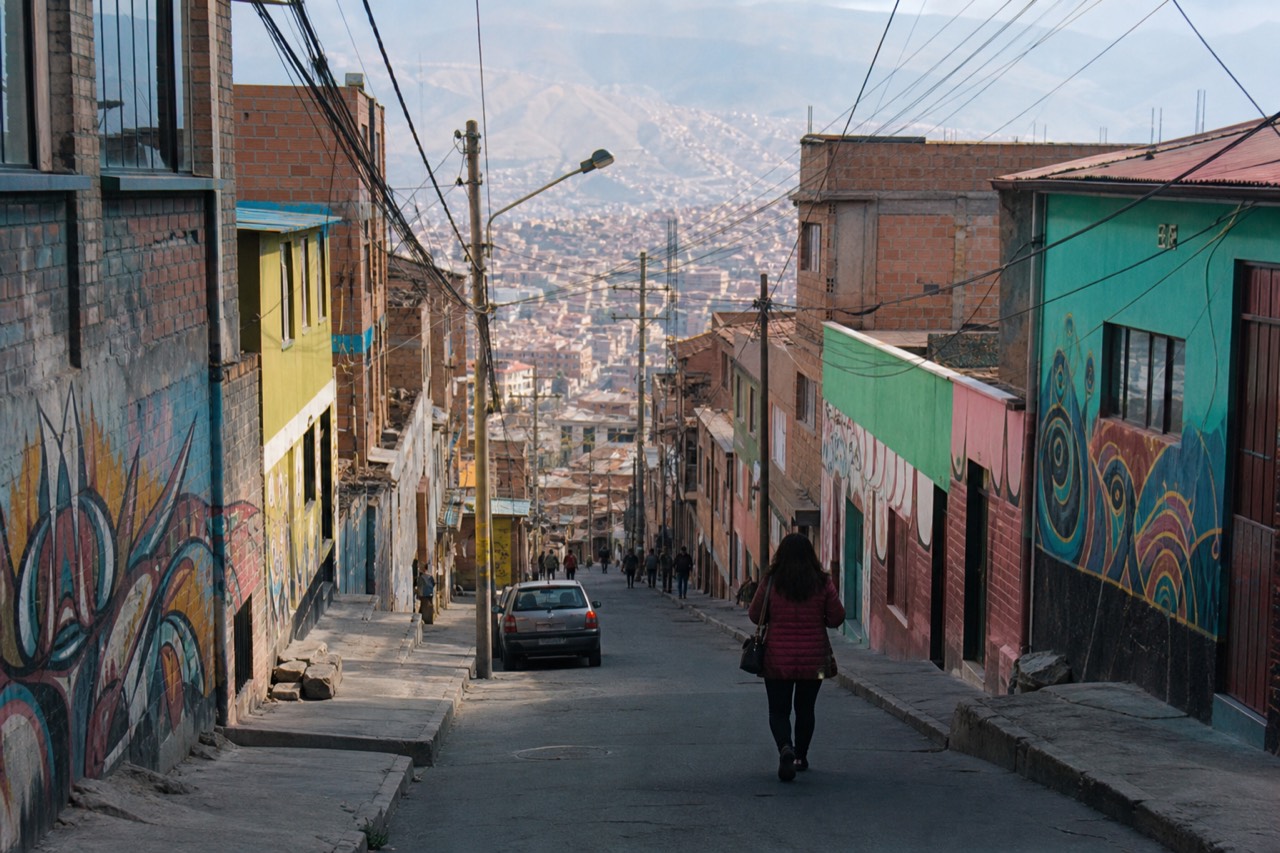
The word people reach for is borrowed from somewhere else, and it does not fit. This is a district at the western end of a metro line, served by a cable car on the same fare as the train, with six sections of outdoor escalator anyone can ride for nothing. There are corner shops, bakeries, schools, barbers, terrace bars and a mural corridor that took more than a million visitors in 2024, Medellín's most-visited site.
None of that describes an informal settlement. It describes a hillside neighbourhood that was poor, remains largely working-class, and has been on the receiving end of two decades of public investment.
Is Comuna 13 a slum?
No. It is a dense working-class urban district with full public infrastructure: a metro terminus at San Javier, the Line J cable car, six free escalator sections covering about 384 metres of hillside, and a commercial tourist corridor. Parts of it are poor and were informally built. Poverty and steep brickwork are not the same as a slum.
The distinction is not pedantry. A slum, as the word is normally used, means a settlement without services: no formal water or power, no transport, no municipal presence, no legal tenure. Comuna 13 has all of those. It sits at the end of metro Line B, its cable car belongs to the same integrated system the whole city uses, and the government has spent years building inside it.
What is true is that this hillside was largely settled by people displaced from rural Colombia, that much of it was self-built before the city caught up, and that plenty of households still live on very little. The neighbourhood also went through a long period of armed control and a military operation in October 2002 that remains unresolved for many families. Those facts gave the label its foothold. They are not evidence for it.
| What "slum" implies | What is actually here |
|---|---|
| No formal transport | Metro Line B terminus, Line J cable car, local minibus routes |
| No public infrastructure | Six free public escalators, paved corridor, street lighting |
| No municipal presence | City maintenance programmes, police presence on the corridor |
| No commerce | Shops, bakeries, food stalls, terrace bars, souvenir trade |
| No legal housing | Formal brick housing across most of the district |
| Cut off from the city | About fourteen minutes of travel from El Poblado, one change |
| Nobody visits | Over a million visitors in 2024, Medellín's most-visited site |
There is a subtler point underneath. The label flattens the place into one thing, and the comuna is not one thing: it holds many separate barrios with their own names and their own conditions.
Where does the label come from?
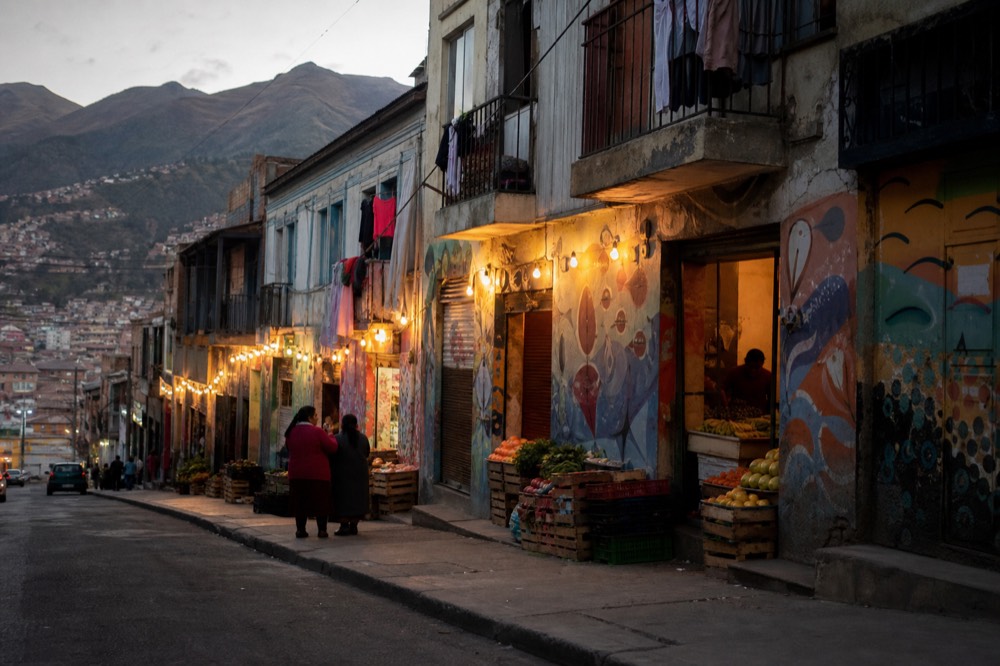
From two decades of outside reporting that described the district only by its violence, plus the visual shorthand of dense self-built brick houses on a steep slope. Documentaries and news packages framed it as a no-go zone, and that framing outlived the conditions it described by a very long way.
Most people arrive with an image assembled from crime documentaries and a drug-cartel series. It is roughly twenty years out of date and was never accurate about ordinary life here even when the violence was worst. People went to work. Children went to school.
The visual shorthand does the rest. Unplastered brick and improvised extensions on a 45-degree slope read as poverty to a visitor whose reference points are flat cities with planning permission. In the Aburrá valley that is simply what hillside housing looks like.
The word also carries a judgement the speaker rarely intends. Residents hear it, guides hear it several times a week, and nobody storms off, because the tourism economy runs on patience. The mild insult still lands. Use the administrative term instead: where the district number comes from explains why Comuna 13 is a filing label rather than a verdict.
What infrastructure does the district actually have?
A metro terminus, a cable car line running on the same integrated fare, six escalator sections built between 2011 and 2012 at a cost of several million dollars, and no entry fee or tourist tax anywhere. Public transport reaches the hillside more directly here than it does in plenty of wealthier parts of the city.
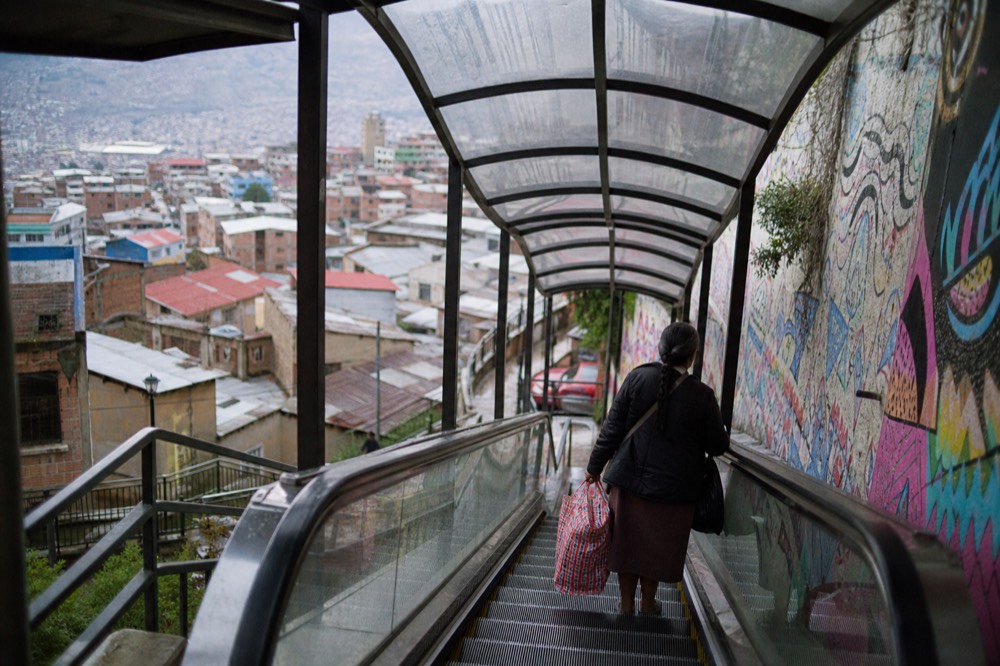
The escalators are the headline. Six outdoor sections, roughly 384 metres in total, replacing a punishing flight of concrete steps residents climbed daily. They cost around six to seven million dollars, run about sixteen hours a day, and were built for the people who live at the top rather than for anyone with a camera.
| Asset | What it is | What it costs you |
|---|---|---|
| Metro Line B | Terminates at San Javier station | About 4,400 COP a ride, or 3,820 with a Cívica card |
| Line J metrocable | San Javier up to La Aurora over the hillside | Covered by the same integrated fare, no top-up |
| The escalators | Six sections, about 384 m, opened 2012 | Free, roughly sixteen hours a day |
| The corridor itself | Paved, lit, policed in daylight | Free, no entry fee, no tourist tax |
| Local minibus routes | Station to the upper barrios | A small cash fare |
| Shops, stalls, terrace bars | Ordinary commerce plus tourist trade | Cash, small notes |
The transport network is not a courtesy. Medellín's cable cars were built as mass transit for exactly these slopes, and the metro system treats Line J as part of the same integrated ride you take anywhere else. A neighbourhood reachable on one fare from El Poblado in about fourteen minutes is part of the city, not outside it.
Maintenance tells the same story. The escalator sections have gone through phased works since late 2025 and into 2026, one at a time so the corridor never closes, the kind of unglamorous municipal upkeep informal settlements by definition do not get.
What do visitors actually find?
A busy, steep, commercially active corridor. Murals on almost every surface, stalls selling mango biche and arepas, terrace bars with valley views, dancers and rappers working the upper landings, and a lot of other visitors. On a Sunday it is closer to a crowded market street than to anything anyone pictured beforehand.
The gap between expectation and reality is the most consistent thing travellers report. People brace for grimness and find a crowd. Whether that reads as charming or disappointing depends on what you came for, and whether a half day here earns its place takes that question on directly.
What visitors do not see is the rest of the comuna, which runs well beyond the sendero into ordinary residential streets with no murals and no reason for a stranger to be there. The corridor is a curated strip, and treating it as the whole district is its own kind of error.
The best walks acknowledge both. A small group led by someone from the barrio shows you the murals and then what sits behind them, which is a different morning from a photo tour. You can see what a barrio-guided street-art walk includes or compare it against small-group walks with food stops included if eating your way along the corridor is part of the appeal.
How should you behave while you are there?
Like a guest in a residential neighbourhood, because that is what you are. Ask before photographing people. Buy from the stalls. Keep to the corridor. Do not use the word slum, do not treat doorways as scenery, and do not spend the morning re-enacting a drug-cartel series in a place where people are still counting their dead.
The photography point goes wrong most often. Those are homes either side of the escalators, front doors opening onto the walkway, and a camera pushed through one is as rude here as anywhere. Walls are fair game. Faces are not, unless you ask.
Spending money locally is the easiest good behaviour available. Stalls, terrace bars, prints and guides from the neighbourhood keep the income where it should land, and the amounts are small. Tip guides properly, in pesos, in cash.
Then there is the conversational side. Medellín has spent thirty years trying to be known for something other than one man, and the fastest way to sour a morning is to keep bringing him up on a hillside where 2002 left families still searching. What happened here in 2002 and after is worth reading first, because knowing it changes what you say out loud.
If safety rather than etiquette is on your mind, the current safety picture for visitors covers the daylight corridor and the advisory context. To compare what is bookable, the full comparison of bookable tours puts every option side by side. And for how a hillside became Medellín's most-visited site, that arc is its own subject: Colombia's official tourism pages now feature the district without any of the old caveats.
Common questions
Is Comuna 13 poor?
Much of it is working-class and parts are genuinely poor, with housing residents built themselves before services arrived. That is different from a settlement without infrastructure. The district has a metro terminus, a cable car, free public escalators and municipal maintenance.
Is it disrespectful to visit Comuna 13 as a tourist?
Not in itself. Tourism is now a real part of the local economy and many guides, stallholders and shop owners are residents. Behaviour is what causes offence: photographing people or their homes without asking, or describing the neighbourhood by its worst decade in front of the people who lived it.
Do people still live in Comuna 13?
Yes, including along the escalator corridor itself. The doors either side of the walkway are front doors, and the route visitors walk is somebody's way to work and school. That is why the escalators were built.