Comuna 13 History: From Operation Orion to Open-Air Gallery
In October 2002 the army moved more than a thousand troops onto this hillside. Ten years later the city put escalators on the same slope, and the walls began telling the story themselves.
Comuna 13 was a battleground through the late 1990s, then the target of Operation Orion in October 2002, the largest urban military operation in Colombia's recent history. Searches for the disappeared at La Escombrera continue. Free escalators arrived across 2011 and 2012, hip-hop and mural collectives followed, and the corridor now draws more than a million visitors a year.
Two numbers sit at opposite ends of the same twenty years. In October 2002, more than a thousand soldiers and police moved onto a hillside of roughly 160,000 people. In 2024, more than a million visitors climbed the same slope to look at painted walls. Almost everything worth understanding about Comuna 13 lives in the distance between those two figures, and most short summaries skip the middle.
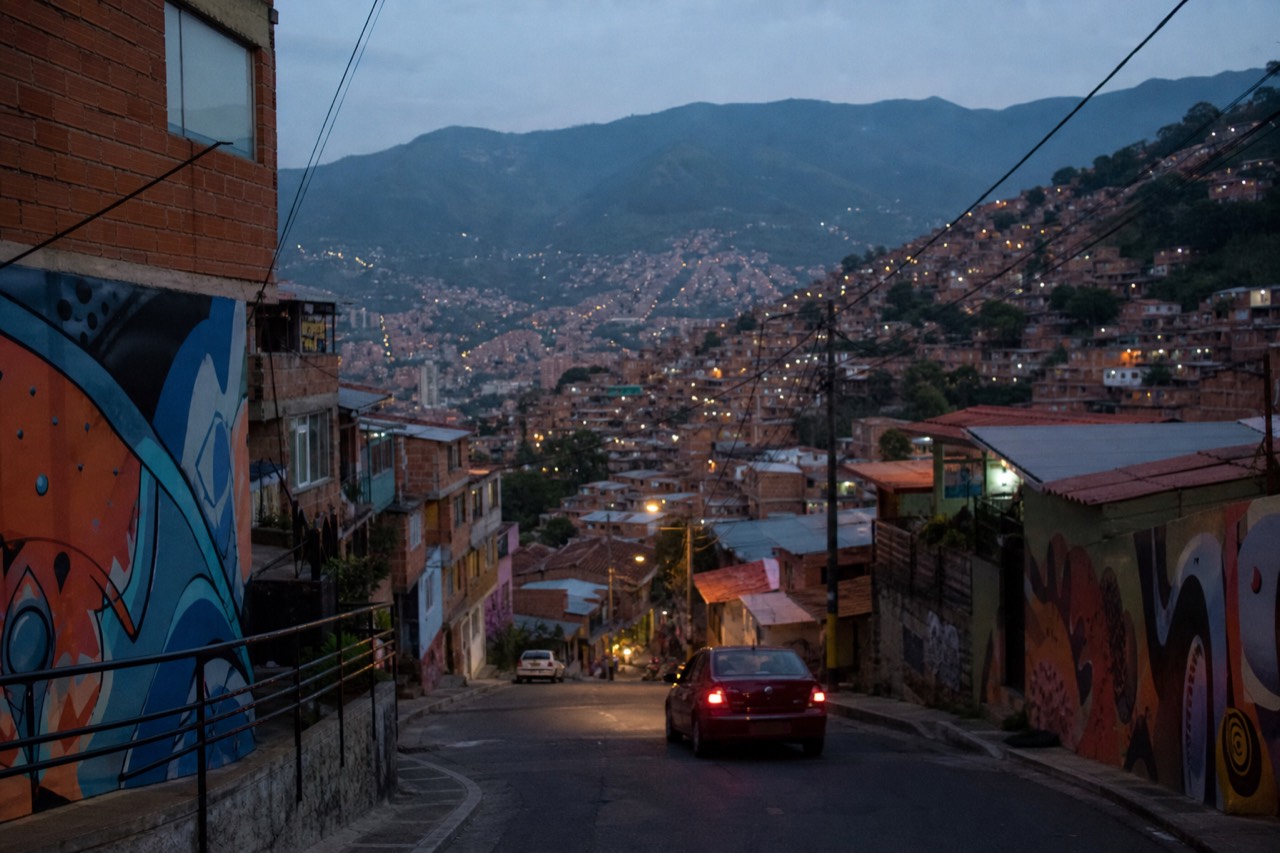
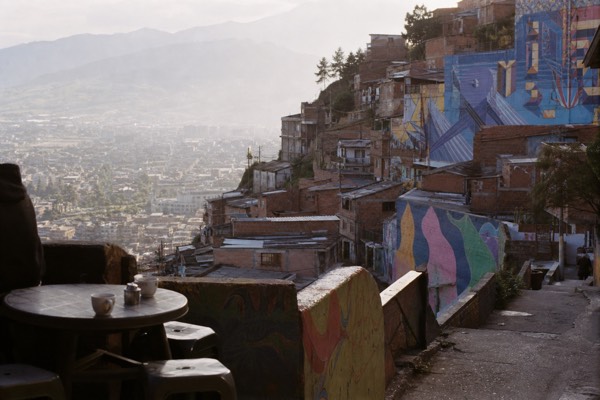
This is District 13 of Medellin, the administrative area called San Javier, one of sixteen comunas in the city and the one that spills down the western mountain wall. The road out of Medellin toward the Uraba coast runs below it. That geography is not decoration. It is the reason armed groups spent a decade fighting over a neighborhood of self-built brick houses, and it is the reason the state eventually came back with concrete and steel instead of helicopters.
Why did an urban war reach this hillside?
Comuna 13 grew from displacement, then became strategically valuable. Families pushed off rural land by Colombia's conflict built the western slope themselves, largely outside city planning. The corridor below leads to the coast, so whoever held the hill held a route for moving people, weapons and goods. Armed groups fought street by street for it.
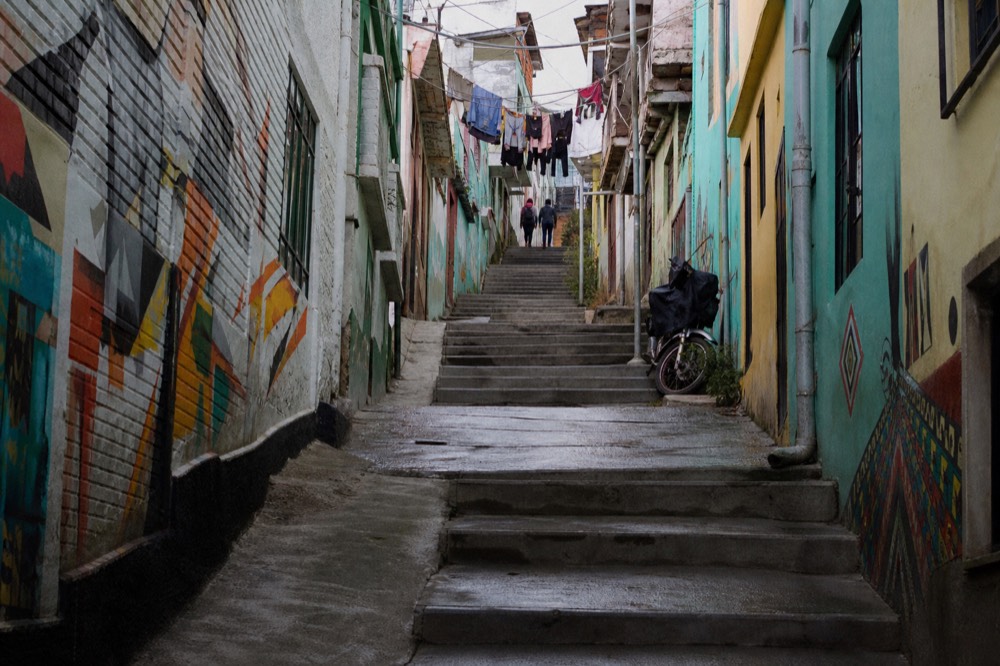
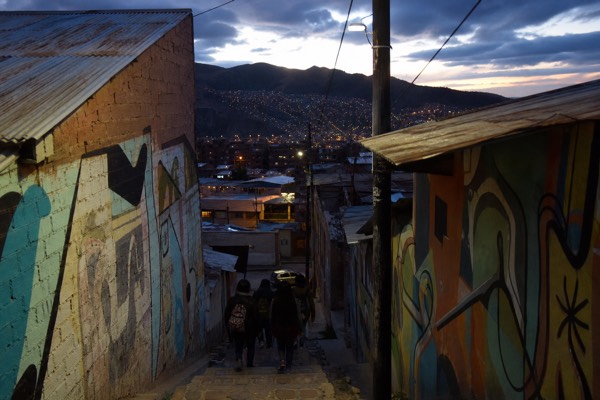
The barrio was settled fast and informally through the 1980s and early 1990s by people arriving from the Antioquian countryside with nothing to build on but a slope. Houses went up in brick and reinforced concrete, one floor at a time, stacked so tightly that the alleys between them narrowed into staircases. Services arrived late or not at all. That is the physical neighborhood you still walk through today, and it explains the shape of the place better than any political history does.
By the late 1990s, several armed structures were competing for it: militias linked to the ELN and the FARC, and the locally rooted Comandos Armados del Pueblo. Residents describe the result as invisible frontiers, lines running down particular streets that you learned by heart because crossing one could be fatal. Children were recruited. Families stayed indoors. The state's presence was intermittent and, when it did arrive, usually military.
If the word itself is confusing, what a comuna actually is is a short answer worth having before the rest of this makes sense: it is an administrative district, not a slang term for a slum, and the distinction matters to people who live here.
What does the timeline look like, decade by decade?
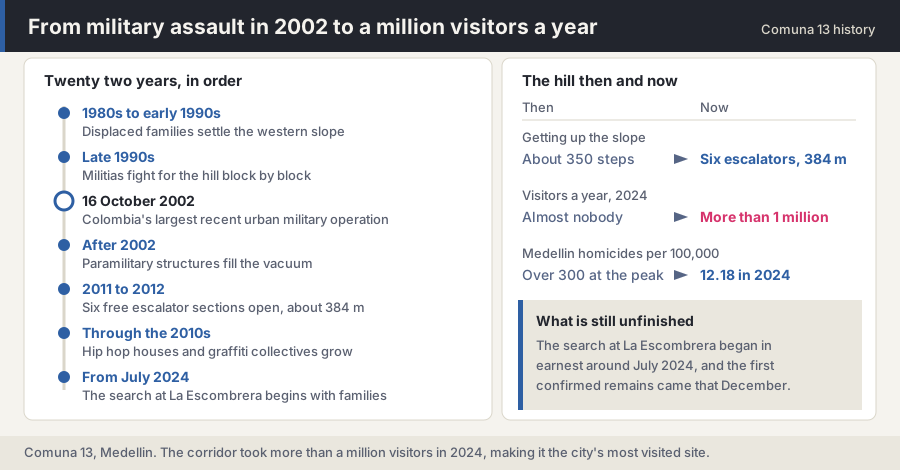
Four phases, roughly. Informal settlement through the 1980s and early 1990s. Armed contest through the late 1990s. Military assault in October 2002, followed by paramilitary control and disappearances. Then infrastructure and culture from 2011 onward: escalators, hip-hop schools, mural collectives, and a tourism wave that passed a million visitors in 2024.
Read the sequence in order and the neighborhood stops looking like a miracle and starts looking like a series of decisions, some of them made by the city, most of them made by people who live on the hill.
Period
What happened
What it left behind
1980s to early 1990s
Displaced rural families settle the western slope and build their own housing
A dense hillside of roughly 160,000 people, largely outside formal planning
Late 1990s
Militias tied to the ELN, the FARC and the local CAP fight for control block by block
Invisible frontiers residents learned by heart
16 October 2002
Operation Orion, the largest urban military operation in Colombia's recent history
Guerrilla militias expelled, hundreds detained, casualties still disputed
After 2002
Paramilitary structures, including the Cacique Nutibara bloc, fill the vacuum
The disappearances families connect to La Escombrera
2011 to 2012
Six sections of free outdoor escalator open in Las Independencias
A 384 metre climb that used to be around 350 concrete steps
Through the 2010s
Hip-hop houses, graffiti collectives and community-run walks grow across the barrio
The painted corridor visitors now come to see
From July 2024
Formal excavation of La Escombrera begins with the families
First confirmed remains announced that December
The gap between the third row and the fifth row is nine years. Nobody flipped a switch. What happened in between was a slow argument, inside the city and inside the barrio, about whether a hillside like this deserved public investment or continued policing, and the escalators were the moment one side of that argument won a budget.
What was Operation Orion?
Operation Orion began on 16 October 2002 under the government of President Alvaro Uribe. More than a thousand soldiers and police, backed by helicopters and armored vehicles, moved into Comuna 13 to expel guerrilla militias. It remains the largest urban military operation in Colombia's recent history, and its civilian toll is still contested.
The operation did what it set out to do in military terms. The militias were pushed out. Twenty kidnapping victims were freed. Hundreds of people suspected of militia membership were detained. Twenty-four years later, it is remembered on the hill less for that outcome than for what happened to civilians during and after it, and the background record is laid out in the public account of Operation Orion.
Counts differ between sources, and the honest version of this page says so rather than picking the largest figure. One detailed report tallies 576 arbitrary detentions, six disappearances and ten confirmed deaths during the initial assault. Other accounts, taking a longer window that includes the paramilitary period that followed, run to dozens killed or disappeared.
What the record shows
Detail
Date
Began 16 October 2002; accounts describe operations across 16 and 17 October and continuing to around 20 October
Ordered under
The government of President Alvaro Uribe
Forces involved
More than 1,000 soldiers and police, with one account putting the combined force near 1,500
Equipment
Helicopters, armored vehicles and automatic weapons in a dense residential area
Targets
Militias tied to the ELN, the FARC and the local Comandos Armados del Pueblo
Stated results
Militias expelled, 20 kidnapping victims freed, hundreds of suspects detained
Documented and disputed harm
One report counts 576 arbitrary detentions, 6 disappearances and 10 confirmed deaths in the initial attacks; other tallies are higher over a longer window
What came next
Paramilitary structures, including the Cacique Nutibara bloc, took over the hill
The part that shapes the neighborhood's politics today is that last row. The armed presence did not end in October 2002. It changed hands. People who lived through both periods will tell you the second one was quieter and, for a while, worse, because a quiet disappearance leaves no gunfire for anyone outside to notice.
What is La Escombrera, and why is the search still going?
La Escombrera is a construction-debris dump on the edge of Comuna 13 that families have named for two decades as a burial site from the conflict years. Colombia's transitional justice court and its search unit for disappeared persons began excavating in earnest in July 2024. The first confirmed human remains were announced that December.
This is the part of the history that is not finished, and it deserves to be written plainly rather than dramatically. Mothers and relatives, organized for years under the banner of women walking for truth, pressed for the site to be searched long before any institution agreed. Roughly 36,000 cubic meters of soil were moved before the first remains surfaced.
Stage
What is known
What the site is
A hillside debris dump on the comuna's western edge, long identified by families as a burial ground
Who is searching
Colombia's Special Jurisdiction for Peace and the national unit for the search of disappeared persons, working with the families
When work began in earnest
Around July 2024
First confirmed remains
Announced in December 2024, after roughly 36,000 cubic meters of soil were removed
Progress by late 2025
Seven bodies recovered, four identified and returned to their families
Continuing work
Extended into further ground, including an area a former paramilitary commander indicated may hold 40 to 50 burials
How the neighborhood marks it
Marches and murals carrying the phrase "las cuchas tenian razon", the mothers were right
That phrase now appears painted on walls in the barrio. It reads as a slogan and functions as a receipt: the women who insisted, for twenty years, that their sons were buried under a landfill were correct, and the institutions that dismissed them were not. If you take one thing from a visit beyond photographs, take that.
The search site itself is not a viewpoint. It is a working excavation and a place of mourning, and visitors have no business treating it as a stop. What guides do share, when the group is ready to hear it, is the story and the names, which is a different and better kind of access.
How did six escalators change a hillside?
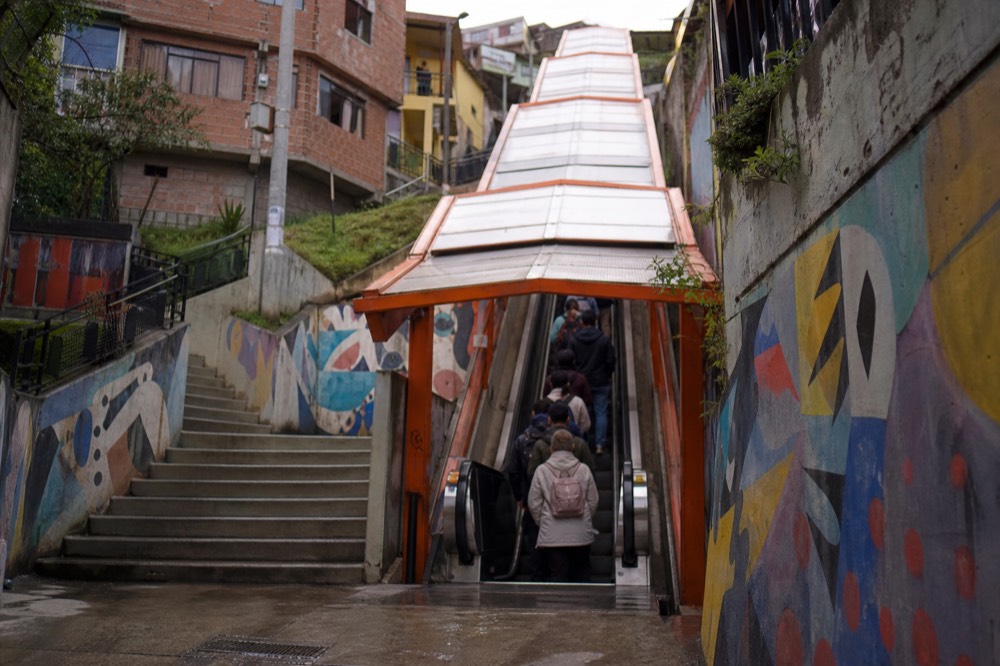
Six sections of free outdoor escalator opened in the Las Independencias sector across 2011 and 2012, running about 384 metres up the slope and replacing roughly 350 concrete steps. They cost around US$6 to 7 million, carry residents and visitors alike at no charge, and run about sixteen hours a day.
Before them, reaching the upper barrio meant a climb equivalent to about twenty-eight stories, on steps, carrying whatever you were carrying. Elderly residents did it. So did people bringing shopping, gas cylinders and children up from the valley. The escalators were sold to the city as social infrastructure rather than a tourist attraction, and that framing is worth keeping in mind while you ride them past a phone camera.
Detail
Figure
Sections
Six, built as double escalators
Total length
About 384 metres up the slope
What they replaced
Roughly 350 concrete steps, a climb equivalent to about 28 stories
Opened
In stages across 2011 and 2012, with public operation from May 2012
Cost
About US$6 to 7 million
Price to ride
Free, for residents and visitors alike
Daily running time
About 16 hours
Current works
Phased maintenance through 2025 and 2026, one section at a time, with the stairs alongside kept open
The maintenance program is the practical thing to check before a visit, because a section can be closed on any given week while the stairs beside it stay open. The city posts its announcements through Medellin's city hall channels, and the mechanics of the ride, the section order and what to do when one flight is down are set out in how the six escalator sections run.
What the escalators actually changed was time. A thirty-minute climb became a six-minute ride, which turned the upper barrio from a place you left in the morning and returned to at night into a place connected to the rest of the city. Shops opened at the landings. Then cafes. Then the walls started getting painted for an audience.
Where did the murals and the hip-hop come from?
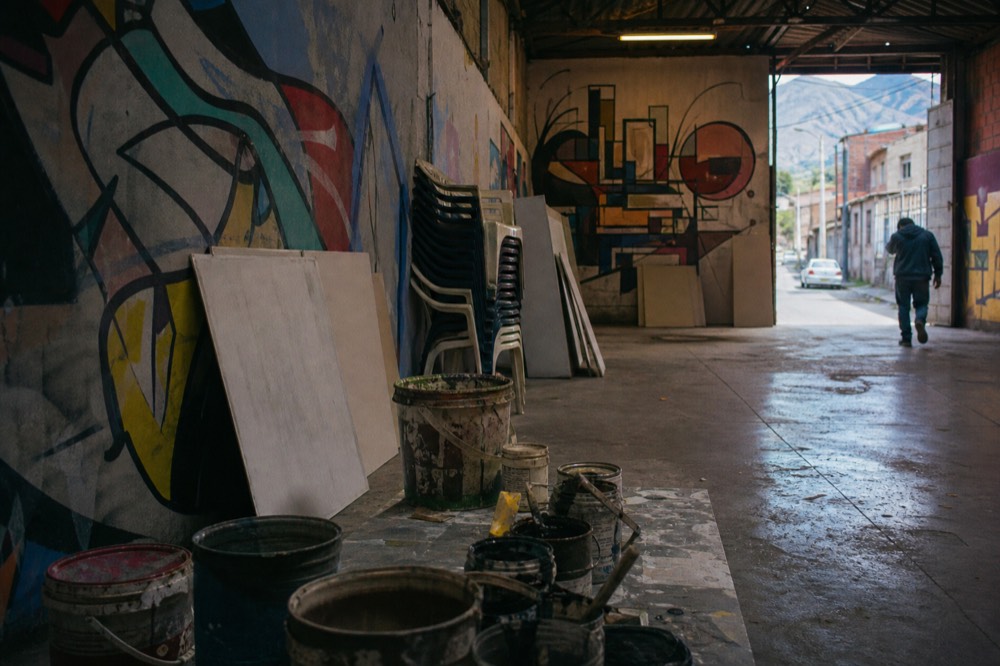
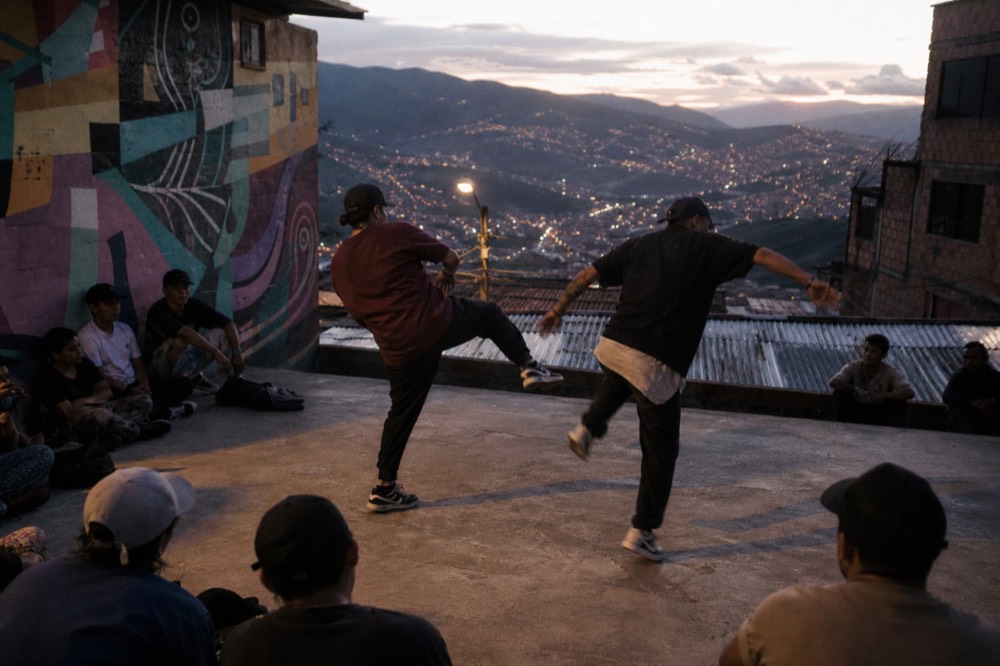
They came first, before the tourism. Hip-hop took root in Comuna 13 in the late 1990s and early 2000s as one of the few things young people could do that was neither joining an armed group nor staying indoors. Rap, breaking, DJing and graffiti spread through informal crews, then through community houses that taught them for free.
The order matters. Outsiders often assume the murals were painted for visitors and the visitors followed. It ran the other way. Kids were writing on walls and rapping on street corners in a neighborhood nobody outside was looking at, and they were doing it about what was happening around them, which at that point was a war.
Graffiti in this context did a specific job. Official accounts of what happened in October 2002 and afterward were contested, incomplete or simply absent. Painting the story on a wall is a way of entering a record that nobody can edit for you, in a place where the people it happened to walk past it every day. That is why so many pieces on the hill are about memory, mothers, disappearance and return, rather than decoration.
The scene was not without cost. The community hip-hop house that anchors much of it takes its name from a local rapper killed in 2009, and several artists and organizers from those early years did not survive the period. Nobody on the hill tells the mural story as a feel-good arc, and a guide who does is selling you something.
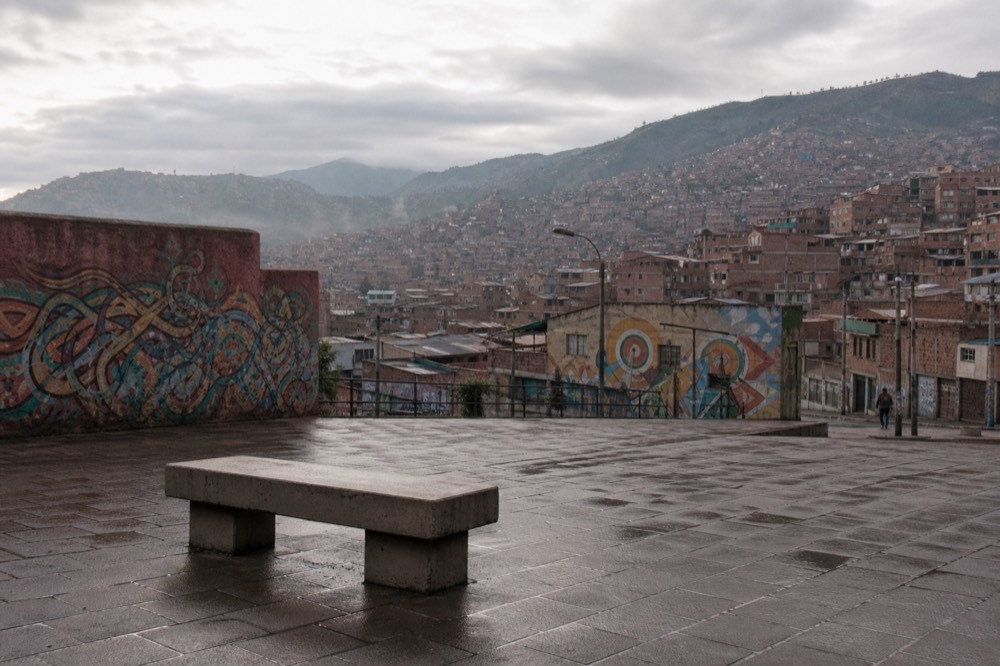
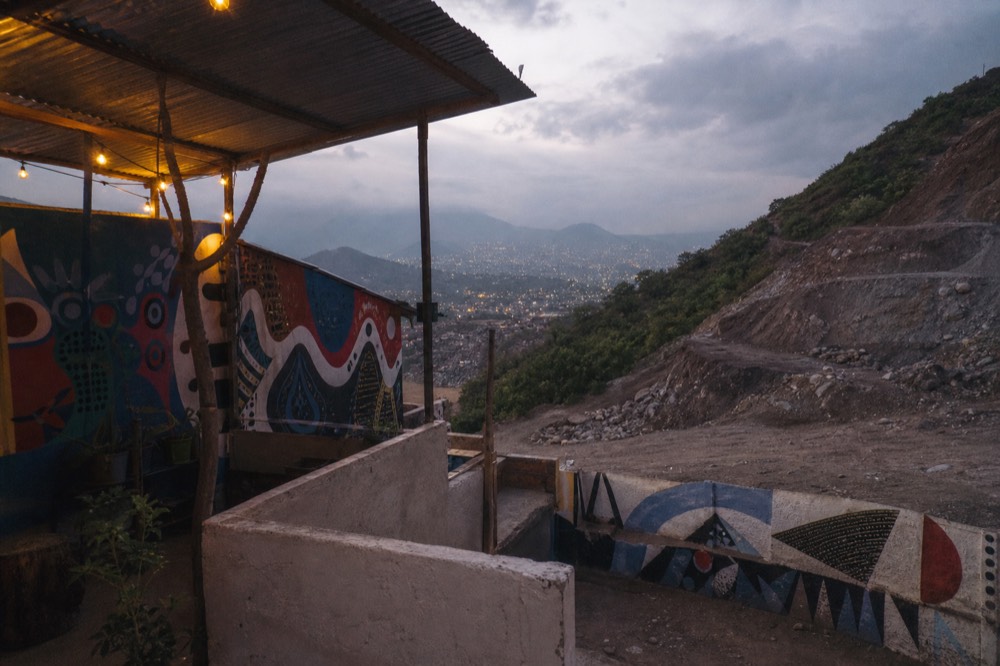
If you want the visual side rather than the chronology, the murals and the walls worth finding covers what is on the corridor now, how pieces get repainted, and the etiquette that keeps residents comfortable with a camera in their street.
How did the graffitour movement start?
Local collectives began running their own walking tours through the 2010s, built around the hip-hop house model of free classes in rap, graffiti, breaking and DJing. The tours were a way to fund the classes and to control the narrative, so the barrio's history was told by people from the barrio rather than by outside operators.
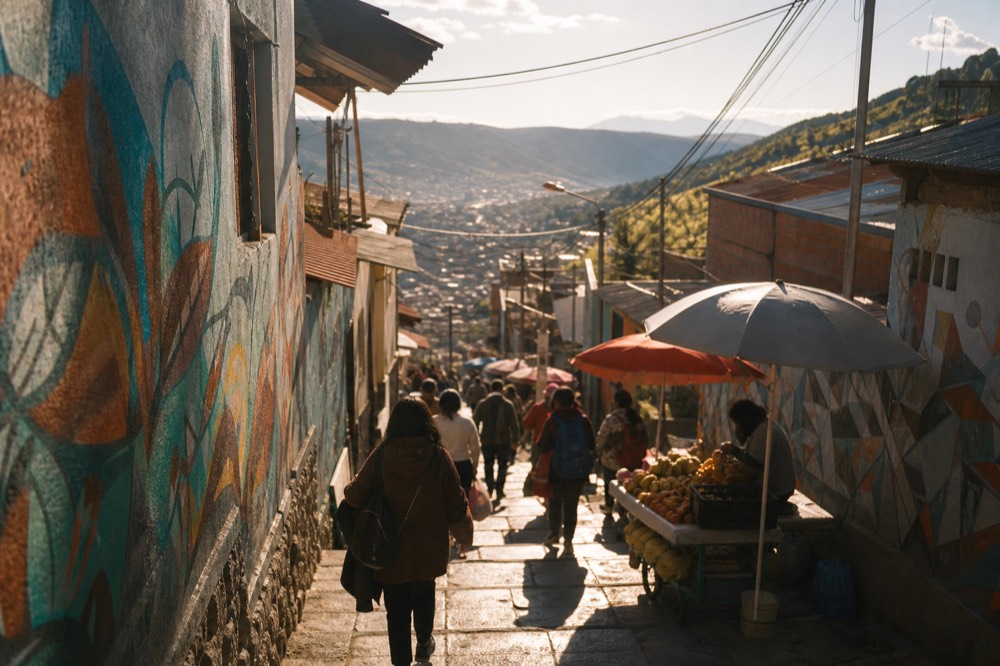
That model is why Comuna 13 tourism looks different from most transformation tourism. The graffitour did not begin as a product. It began as an extension of a youth program, with the walk itself doubling as the fundraising arm, and it grew into a network of guides, galleries, cafes, souvenir stalls and small food businesses along the same 384 metres.
Two consequences follow, and both are visible on any current walk. The first is that guide quality varies enormously, because the field expanded much faster than any training pipeline. The city has since introduced a certification program for local guides in the neighborhood, partly to keep the story accurate. The second is that the money spread unevenly, concentrating around the escalator corridor while streets two blocks away saw very little of it.
What actually changed, before and after?
Access, presence and attention. A 350-step climb became free escalators and a cable-car line. Military operations gave way to city infrastructure and permanent daytime policing on the visitor circuit. And a hillside almost nobody entered voluntarily became Medellin's most-visited site, with more than a million people on the corridor in 2024.
The honest version of a before-and-after table includes the things that did not change. Comuna 13 is still a low-income residential neighborhood of roughly 160,000 people. Armed groups have not vanished from the wider comuna. The visitor corridor is a narrow, well-policed strip inside a much larger barrio, and confusing the two is the single most common mistake in writing about this place.
Measure
The hill then
The hill now
Getting up the slope
Roughly 350 concrete steps, a climb of twenty-plus minutes
Six free escalator sections over about 384 metres, plus a cable-car line across the wider comuna
The state's presence
Military operations, above all in October 2002
City-funded infrastructure, permanent daytime policing on the tourist circuit, a guide certification program
Movement between streets
Invisible frontiers residents could not cross
An open daytime corridor; the wider barrio is still residential and still has its own rules after dark
The walls
Bare brick and political slogans
Murals painted, repainted and maintained by local collectives
Who comes
Almost nobody from outside
More than 1 million visitors in 2024, the city's most-visited site
Medellin's homicide rate
Over 300 per 100,000 at the early-1990s peak
12.18 per 100,000 in 2024, the record low, and 13.13 in 2025
That last row is a city figure, not a Comuna 13 figure, and no reliable neighborhood-level rate exists for recent years. It still tells you something real: the barrio's turnaround happened inside a citywide one, and neither is finished. The practical read for a visitor is in the current safety picture, which separates daytime corridor conditions from everything else.
Which places on the hill carry the history?
Five, mostly within a short walk of each other: the escalator corridor in Las Independencias, the viewpoint terraces above each flight, the community hip-hop house that anchors the guide collectives, San Javier station at the foot of the slope, and the cable-car line that crosses the wider comuna. La Escombrera sits apart, and is not a sightseeing stop.
Place
What it is
What to know
The escalator corridor, Las Independencias
Six sections of free outdoor escalator with landings between them
The spine of nearly every guided walk, and the most densely painted stretch
Viewpoint terraces
Small platforms and rooftop cafes at the top of each flight
Standing there costs nothing; the coffee and the fruit cups do
The community hip-hop house
Free classes in rap, graffiti, breaking and DJing, and the origin point of the guide collectives
Named for a local rapper killed in 2009
San Javier station
Terminal of metro Line B and the foot of the cable-car line
Where nearly every self-guided visit begins
The cable car across the comuna
A metrocable line running from San Javier up the valley
Covered by one integrated metro fare, no separate ticket
La Escombrera
A former debris dump, now an active search site
A place of mourning and an excavation, not a viewpoint
Getting to the first of those is simpler than most visitors expect, and one fare covers the whole chain. The metro route out to San Javier has the line changes, the current fare and the walk from the station.
Which tours actually tell this story?
All twelve bookable walks touch the history; they differ in how much time they give it. The cheapest history-first walk runs about three hours at $14. Transit-heavy versions add the metro and cable car. Small-group and private walks trade breadth for depth, and the workshop ends with a spray can rather than a viewpoint.
Group size is the variable that changes what you hear. On a walk of forty people, a guide is projecting over street noise and sticking to the parts that carry. In a group of ten or fewer, the conversation can reach the harder material, which is where the real value of this history sits.
Walk
From
Runs
Group
Where the emphasis sits
History-first walk with snacks and street shows
$14
3 h
Shared
4.9 across 2,313 reviews; the sequence first, food alongside
Most-booked walk with metro, cable car and street food
$21
3 to 4 h
Shared
4.8 across 10,683 reviews; corridor plus the transit that connects it
District walk with a cable-car ride
$22
3 to 4 h
Shared
4.7 across 1,541 reviews; more of the wider comuna, less of the corridor
Street-art walk with a barrio-born guide
$15
2 to 3 h
Tiny
5.0 across 55 reviews; the personal version of the same history
Private history walk with car and hotel pickup
$113
4 to 5 h
Private
4.9 across 258 reviews; sets the barrio inside the city's wider 1990s story
History, snack and graffiti workshop
$24
About 4 h
Shared
5.0 across 502 reviews; the history first, then a wall of your own
Prices are current starting figures and move with the date and the group size you pick. Every walk here cancels free up to 24 hours out, which matters more than it sounds in a city where an afternoon downpour can rearrange a day.
A quiet, tiny-group walk led by a guide who grew up in the barrio, with an empanada, an artisanal popsicle and coffee along the way. New listing, small review count, perfect scores so far, and the most personal version of the story on this page.
Capped at fifteen people, which changes everything: you hear the guide without leaning in, you stop where the group wants to stop, and the empanadas arrive warm. The pick for anyone allergic to megaphone tours.
Treat it as a neighborhood first and an attraction second. People in the murals are somebody's family, and some of them are still missing. Photograph the art rather than residents, pay the performers and vendors who work the corridor, keep the Escobar material in the past tense, and let the guide set the tone at the difficult stops.
The most common failure is not disrespect. It is enthusiasm applied at the wrong moment: a group cheering at the top of an escalator flight while a guide is fifty metres in front of them explaining what happened on that landing in 2002. Guides handle this gracefully, and the fix is simply to hang back and listen before raising a camera.
The second failure is the cartel frame. Medellin's most famous criminal era is context here, since the violence of the 1980s and 1990s is part of why this hillside filled up and then fell apart. It is not entertainment, and the neighborhood has spent twenty years trying to be known for something else. Guides born on the hill are direct about that, and visitors who take the cue tend to get a much better tour.
Money is the third piece, and the easiest to get right. Buy the fruit cup, tip the dancers, pay for the mural postcards, and use a guide from the barrio where you can. The corridor supports a real local economy now, and that economy is the main thing standing between the neighborhood and being priced out of its own story. Whether that turnaround makes the visit worthwhile is a question people ask constantly, and why the neighborhood became so famous answers it with the numbers rather than the sentiment.
Twenty-two years from military assault to Medellin's most-visited site, in the order it happened.
Comparing the full field before you book is quicker than reading twelve listings: the Comuna 13 graffiti tour comparison page puts all twelve side by side with ratings, group caps and what each one includes. Anyone deciding whether the barrio also deserves a place on a wider Medellin itinerary will find the official city travel material useful for the surrounding days, and whether the barrio still counts as a slum settles the question most people are too polite to ask out loud.
Frequently asked questions
What was Operation Orion in Comuna 13?
Operation Orion was a military offensive launched on 16 October 2002 under President Alvaro Uribe, sending more than a thousand soldiers and police, with helicopters and armored vehicles, into Comuna 13 to expel guerrilla militias. It is described as the largest urban military operation in Colombia's recent history. The militias were pushed out and twenty kidnapping victims were freed, but the civilian toll is disputed, with one report counting 576 arbitrary detentions, six disappearances and ten confirmed deaths in the initial assault.
What is La Escombrera and what has been found there?
La Escombrera is a construction-debris dump on the edge of Comuna 13 that families identified for years as a burial site from the conflict period. Colombia's transitional justice court and the national search unit began excavating in earnest in July 2024, and the first confirmed human remains were announced that December after roughly 36,000 cubic meters of soil were removed. By late 2025, seven bodies had been recovered and four identified and returned to their families. It is an active search site, not a place to visit.
When were the Comuna 13 escalators built, and are they free?
The six sections of outdoor escalator in the Las Independencias sector opened in stages across 2011 and 2012, with public operation from May 2012. They run about 384 metres up the slope, replacing a climb of roughly 350 concrete steps, and cost around US$6 to 7 million. They are free for residents and visitors alike and run about sixteen hours a day. Phased maintenance through 2025 and 2026 closes one section at a time, with the stairs beside it kept open.
Why is Comuna 13 covered in murals?
Because the neighborhood decided to keep its own record. Hip-hop and graffiti took root there in the late 1990s and early 2000s as an alternative to armed groups for young people, and painting became a way of documenting what happened during and after October 2002 when official accounts were contested or absent. The murals came well before the tourism, and much of the work still deals with memory, disappearance and the mothers who campaigned for the searches at La Escombrera.
Is it disrespectful to take a tour of Comuna 13?
Not if you take a good one and behave like a guest. The walking tours grew out of community hip-hop programs and were built partly so the barrio could tell its own history rather than have it told for it, and the money supports guides, cafes, artists and vendors who live there. Photograph the art rather than residents, tip the performers, buy from local stalls, and follow the guide's lead at the parts of the story that concern people who are still missing.
Hear this story on the hill itself
The history-first walk is the cheapest way to get the sequence from someone standing in it, with snacks and street performances along the corridor. Check the live dates and what the ticket covers.