Best Time to Visit Comuna 13: Days, Hours, Weather and Crowds
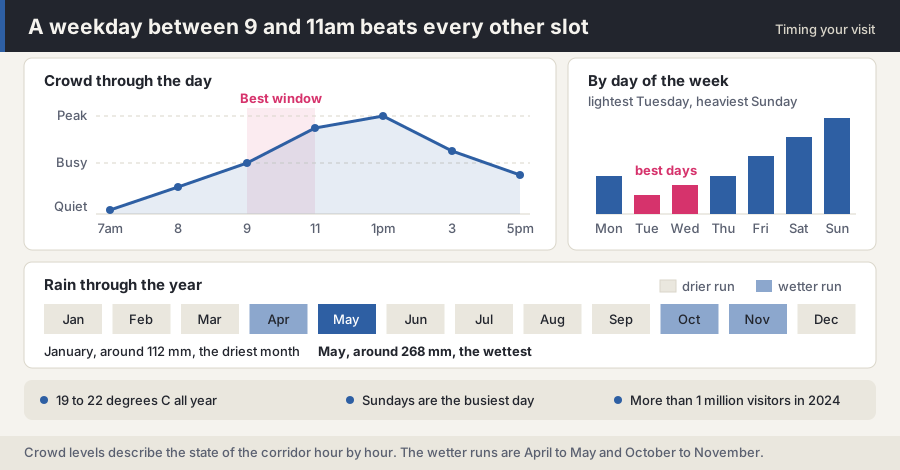
May drops around 268 mm of rain on Medellin. January drops about 112 mm. The temperature barely moves between them, which means your timing decision is about water and people, not weather.
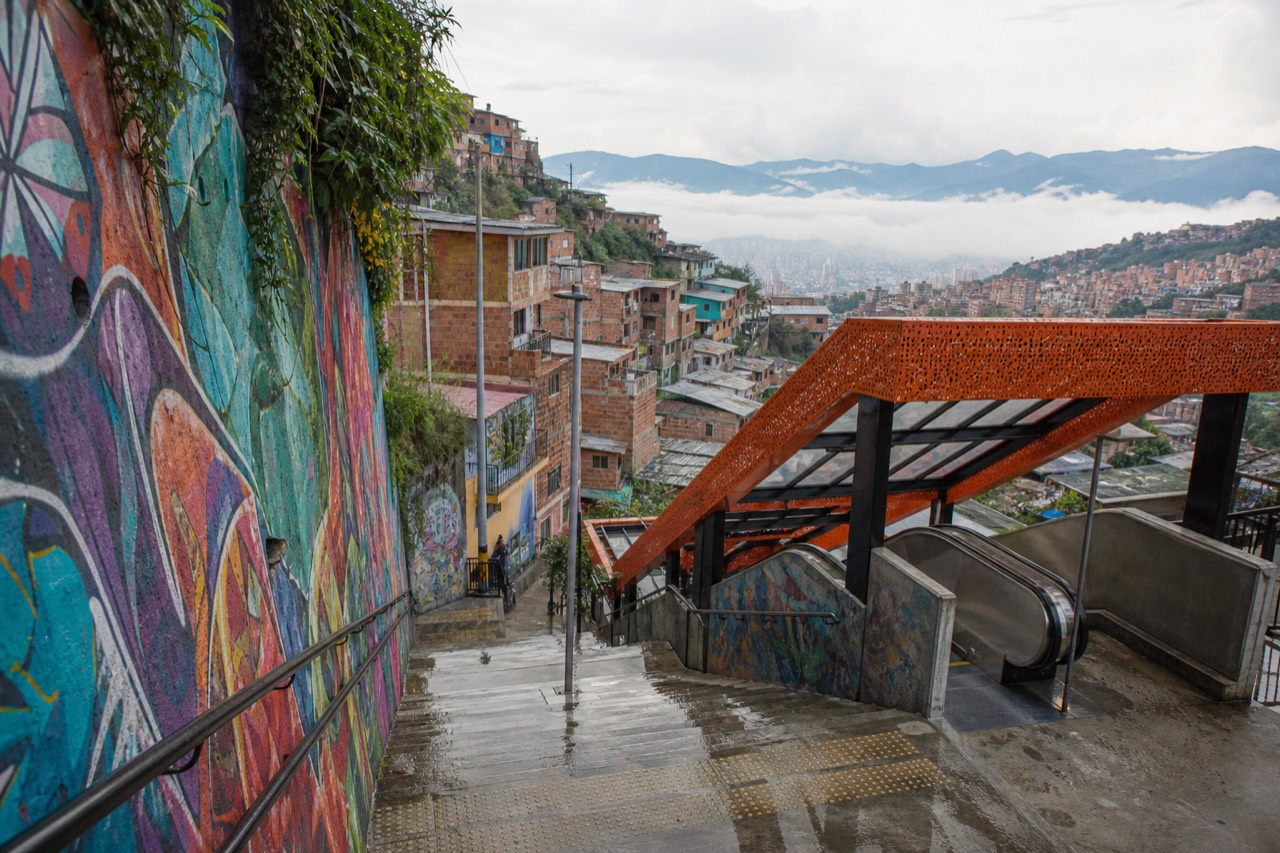
A weekday morning, ideally arriving between 9 and 10am. That window gives you cool air, dry ground, running escalators and a corridor that has not yet filled. Sundays are the busiest day of the week and late morning onward is peak on any day. April to May and October to November are the wet runs, and the rain almost always comes in the afternoon.
May drops around 268 mm of rain on Medellín. January drops about 112 mm. Between those two extremes the thermometer moves almost not at all, sitting somewhere around 19 to 22°C every month of the year, which is why the city gets called the place of eternal spring and why nobody here plans a trip around temperature.
So the timing question for Comuna 13 is not really about seasons. It is about water and people. Rain arrives in predictable runs and, more usefully, at predictable hours. Crowds arrive in a pattern you can read off a clock. Get both right and you walk a corridor that is dry, cool and half empty. Get both wrong and you queue on a wet escalator behind four hundred people in the middle of the afternoon.
When is the best time to visit Comuna 13?
A weekday morning, arriving between 9 and 10am. That single choice solves the three variables that matter: the crowd has not built, the ground is dry, and the heat has not arrived. Sundays are the busiest day of the week, and late morning onward is peak on every day of the week.
The reason the morning works so well is that Medellín's rain is strongly afternoon-weighted. Even in the wettest months, mornings tend to be clear or lightly overcast, and the serious water usually turns up after lunch. That is not a rule you can bank on daily, but across a year of visits it is the single most reliable pattern in the city.
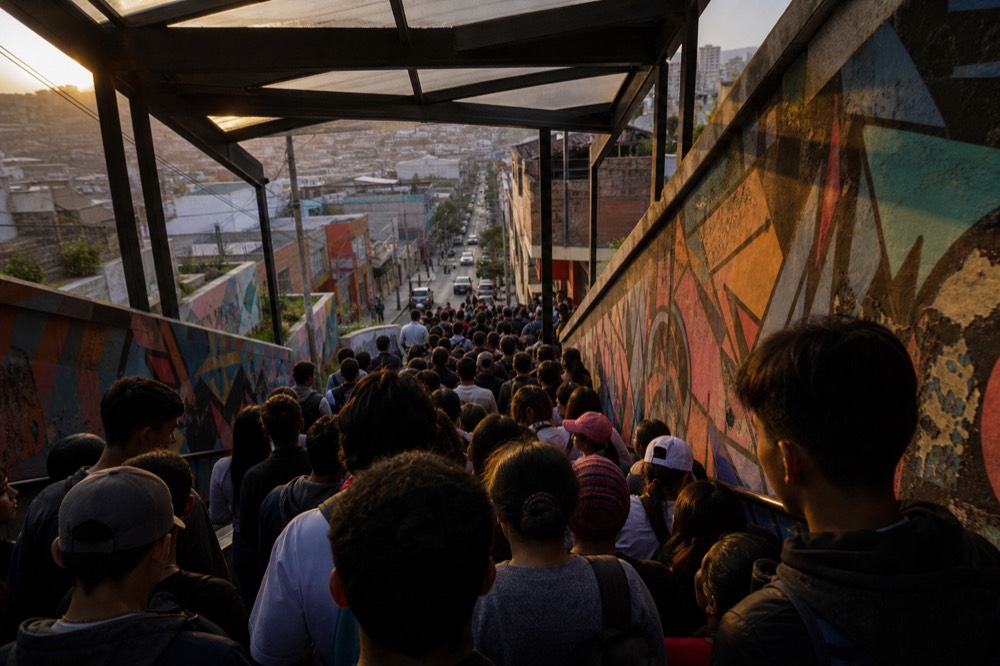
Crowds follow a different clock and push the same way. The corridor absorbed more than a million visitors in 2024, which made it the most-visited site in Medellín, and that flow is not spread evenly. Tour groups cluster from mid-morning onward because that is when hotel pickups, breakfast and transit converge. Arrive an hour ahead of that convergence and you get the murals to yourself for a while.
The third factor is comfort. This is a hillside walk of roughly 384 metres of ascent assisted by escalators, and the difference between doing it at half past nine and doing it at half past one is significant when the sun is directly overhead on painted concrete. Groups with children or anyone unsteady on stairs feel that gap the most.
If you can only do one thing with this page, do this: book a morning departure on a weekday that is not a public holiday, and treat everything below as refinement. Which tour suits which traveller covers the other half of the decision, and the honest safety picture explains why daylight matters beyond comfort.
What time of day should you go to Comuna 13?
Between 9 and 11am. Before 9 the stalls, shows and artists are still setting up and the corridor is a residential street going about its morning. After 11 the tour groups arrive in force and stay until late afternoon. The escalators run around sixteen hours a day, so operating hours are never the limit.
The corridor has a daily rhythm that has almost nothing to do with the tourist schedule and everything to do with people living their lives on a steep hill. School runs and deliveries come first. The stalls open through mid-morning. The dance crews and spray artists set up around the time the groups start arriving, because that is when there is an audience.
That produces an honest trade-off, and it is worth naming rather than pretending the earliest slot wins everything. Arrive at eight and you get an almost empty route, cool air and clean photographs, but a quieter version of the place with fewer performances and half the food shut. Arrive at ten and you get the full show with a manageable crowd. Arrive at one and you get everything the barrio has plus everybody else who came for it.
Transit timing is the piece people forget. Medellín's metro runs heaviest roughly from 6 to 8 in the morning and again from 5 to 7 in the evening, so a 9am arrival at San Javier also means missing the crush on Line B. The trip runs about 30 to 40 minutes from El Poblado, and getting there from El Poblado breaks down the transfer.
Time
Corridor state
What is open
Verdict
7 to 8am
Residential, near empty
Almost nothing tourist-facing
Photographers only
8 to 9am
Waking up, stalls setting out
Some food, few performers
Quiet, incomplete
9 to 11am
Filling, still comfortable
Most stalls, artists arriving
The best window
11am to 1pm
Busy, groups stacking up
Everything running
Full experience, hot
1 to 3pm
Peak density and peak heat
Everything, plus queues
Avoid if you can
3 to 5pm
Thinning, rain risk climbing
Most things, shows winding down
Acceptable
5 to 7pm
Locals returning, light going
Terraces and bars taking over
Guide recommended
After dark
Residential again off the main strip
Terraces on the corridor only
Daylight is the working advice
Which day of the week is best for Comuna 13?
Tuesday through Thursday. Sundays are unambiguously the busiest day, with local families joining the visitor flow, and Saturdays run a close second. Mondays can be patchy because some stalls and small operators take the day off. Midweek gives you the full working barrio with the thinnest crowd.
The Sunday effect is bigger here than at most attractions because Comuna 13 is a neighbourhood rather than a venue. On Sunday the corridor carries its usual visitor load plus Medellín's own weekend traffic: families out walking, teenagers filming, extended groups eating on the terraces. It is genuinely enjoyable if crowds do not bother you, and close to unpleasant if they do.
Saturday behaves like a slightly diluted Sunday. Weekday differences are smaller and mostly come down to which operators run which departures, and how many cruise-style day-trip combinations are pushing groups uphill that morning. Tuesday to Thursday consistently reads as the calm middle.
There is one more scheduling wrinkle that catches people: Colombian public holidays, of which there are a lot, mostly landing on Mondays. A holiday Monday behaves like a Sunday. Check the calendar before assuming a Monday is quiet, especially in January, and around Semana Santa when the whole country moves.
Day
Crowd level
Character
Verdict
Monday
Light to moderate
Some stalls closed, calmer
Good, slightly reduced
Tuesday
Lightest of the week
Full working barrio
Best day
Wednesday
Light
Full working barrio
Best day
Thursday
Light to moderate
Groups start increasing
Very good
Friday
Moderate
Weekend energy building
Good, go early
Saturday
Heavy
Locals plus visitors
Morning only
Sunday
Heaviest of the week
Family day, everything open
Great atmosphere, worst crush
Public holiday Monday
Heavy
Behaves like a Sunday
Check the calendar first
What is the best month to visit Comuna 13?
December through March, or June through September. Those are the drier runs. April to May and October to November are the wet ones, with May the rainiest month at around 268 mm against January's 112 mm. Temperature is not a variable here: it holds at roughly 19 to 22°C all year.
Medellín runs a bimodal rainfall pattern, which means two wet seasons and two dry ones rather than the single summer-winter split most travellers expect. The wet runs land in April to May and again in October to November. The drier stretches sit either side, around December to March and June to September, and those are the months where an afternoon slot becomes a reasonable gamble rather than a bad bet.
The mild year-round temperature is not marketing. Official tourism material for the city references around 19°C as the working average, and the daily swing is small enough that the same clothes work in February and August. What changes month to month is how much water falls out of the sky and how much of the day is usable. Colombia's official Medellín page is the plainest statement of that climate.
Crowd seasonality layers on top and does not follow the rain. Late December into January is high season for domestic and international travel alike, and the Feria de las Flores in August fills the city. Those periods can be busier than a wet October despite better weather, which is why the month table below rates both.
Month
Rain pattern
Crowd level
Verdict
January
Driest month, around 112 mm
Heavy early, easing after mid-month
Excellent weather, book ahead
February
Dry run
Moderate
One of the best months
March
Dry, turning wetter late
Moderate
Very good
April
Wet run begins
Moderate
Morning slots only
May
Wettest, around 268 mm
Lighter
Mornings, and expect a soaking
June
Drier run returns
Moderate to heavy
Very good
July
Dry run
Heavy, peak season
Great weather, big crowds
August
Dry run, flower festival
Heaviest of the year
Book early, go early
September
Dry run ending
Moderate
Very good, quieter
October
Wet run
Lighter
Mornings only
November
Wet run
Lightest of the year
Wet but calm
December
Drying out, festive
Building through the month
Good, rising prices
How do a million-plus visitors actually spread across the corridor?
Unevenly, in a way that works in your favour if you plan around it. The 2024 total exceeded a million, but that flow concentrates into roughly a six-hour daily window, peaks on weekends, and clusters at four or five specific stopping points rather than spreading along the route.
Understanding where the density sits matters as much as when. The pinch points are consistent: the lower escalator landings where groups regroup, the main mural wall where everyone photographs the same section, the viewpoint terraces where the valley opens up, and wherever a dance crew has set up that morning. Between those spots the corridor is often surprisingly open even at busy hours.
That gives you a tactic beyond simply going early. If you land at a busy hour, keep moving through the clusters and take your time in the stretches between them. Guides on the smaller-group walks do this instinctively, which is one practical reason a fifteen-person group has a better time than a forty-person one at noon.
The other pattern worth knowing is the day-trip effect. Full-day city combinations tend to reach Comuna 13 in the late morning after covering central Medellín first, so late morning carries a disproportionate share of large groups. Dedicated two-to-three-hour walks are more likely to run genuinely early departures.
Pressure point
When it is worst
Why
Workaround
Lower escalator landings
11am to 2pm
Groups regroup and photograph here
Climb through, stop higher up
Main mural wall
Late morning onward
One section everybody shoots
Shoot it first thing or last
Viewpoint terraces
Midday to mid-afternoon
Valley view plus food and drink
Weekday morning
Dance and rap performances
Midday, weekends
Scheduled around the audience
Watch from the edge, not the middle
San Javier metro platform
6 to 8am, 5 to 7pm
City commuter peak
Travel between 9am and 4pm
Line J metrocable queue
Weekend afternoons
Locals and visitors share the line
Ride it on the way up, early
Does rain ruin a Comuna 13 tour?
It changes it rather than cancelling it. Tours run in the rain, the escalators are partly covered, and the terraces have roofs. What suffers is the walking between sections: painted concrete steps get slick, open viewpoints lose the valley, and the outdoor performances stop. Morning slots dodge most of it.
The practical damage is to photographs and to footing. A wet corridor at three in the afternoon in May is a real experience of the place, and some travellers prefer the emptier version, but the valley panorama that makes the viewpoint terraces worth the climb is often just cloud. Murals photograph fine in flat light, so not everything is lost.
Slips are the genuine hazard rather than the rain itself. The route mixes escalator sections with ordinary stairs and steep painted ramps, and those surfaces get treacherous fast. Shoes with grip do more for a wet-season visit than any rain jacket, and a small folding umbrella beats a poncho in a crowd.
If your dates fall in April, May, October or November, build the trip around a morning departure and keep one flexible day in reserve. Free cancellation up to 24 hours is standard across the twelve listed tours, so shifting a booking after checking the forecast costs nothing. The wider Medellín seasons put those windows in context for the rest of your trip.
Conditions
What still works
What you lose
Move it?
Light rain, morning
Murals, escalators, food stalls
Some outdoor performances
No, go
Heavy rain, morning
Covered sections, terraces, story
Viewpoints, comfort, footing
Shift to the next morning
Afternoon downpour, wet season
Indoor and covered stops
Most of the walk's appeal
Yes, rebook the morning
Overcast, no rain
Everything
Nothing but the light quality
No, this is a good day
Post-rain clear spell
Everything, washed clean
Nothing; steps stay slick
No, one of the best windows
Do the escalators or cable car ever stop?
Both go down for planned maintenance, and neither closure is a reason to cancel. The six escalator sections have been running phased maintenance through 2025 and 2026, with the stairs beside each section staying open. Line J closed for annual maintenance from July 16 to 22, 2026, and the metrocable lines rotate maintenance across July to October.
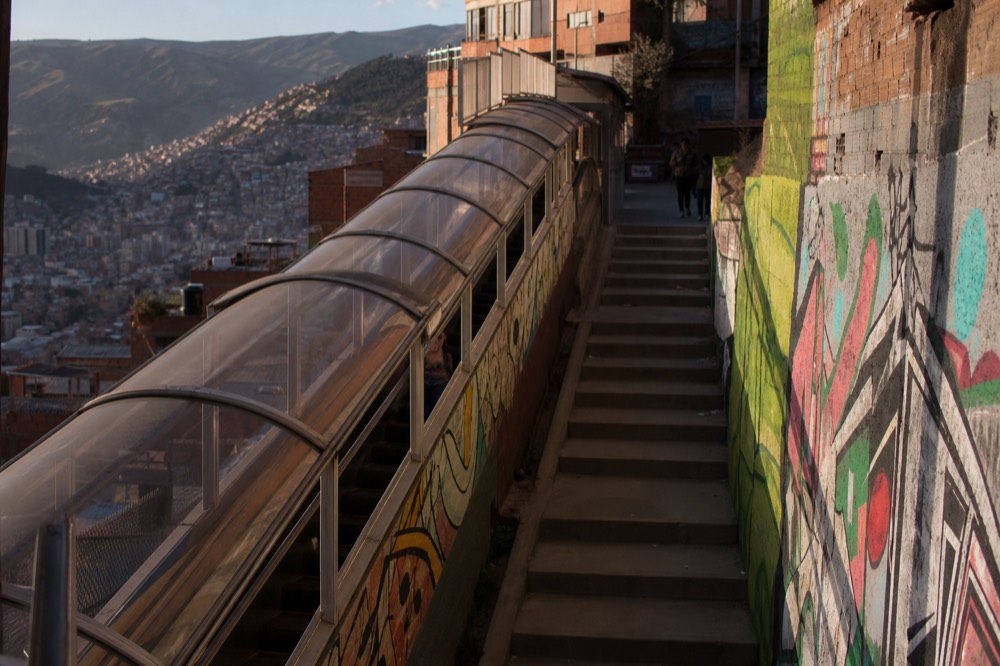
The escalators are the reason the corridor exists in its current form. Six sections covering roughly 384 metres of hillside, built in stages across 2011 and 2012 at a cost of around six to seven million dollars, free to ride, running about sixteen hours a day. When one section is down for works the walk becomes a stair climb for that stretch, which most people manage and some people cannot.
That is a genuine planning factor for anyone with a stroller, a wheelchair or a bad knee, because a phased closure can turn a manageable route into an impossible one on a specific day. The city publishes works through its own channels rather than through tour listings, so Medellín's city hall site is the place to check if step-free matters to you. How the six escalator sections work covers the layout section by section.
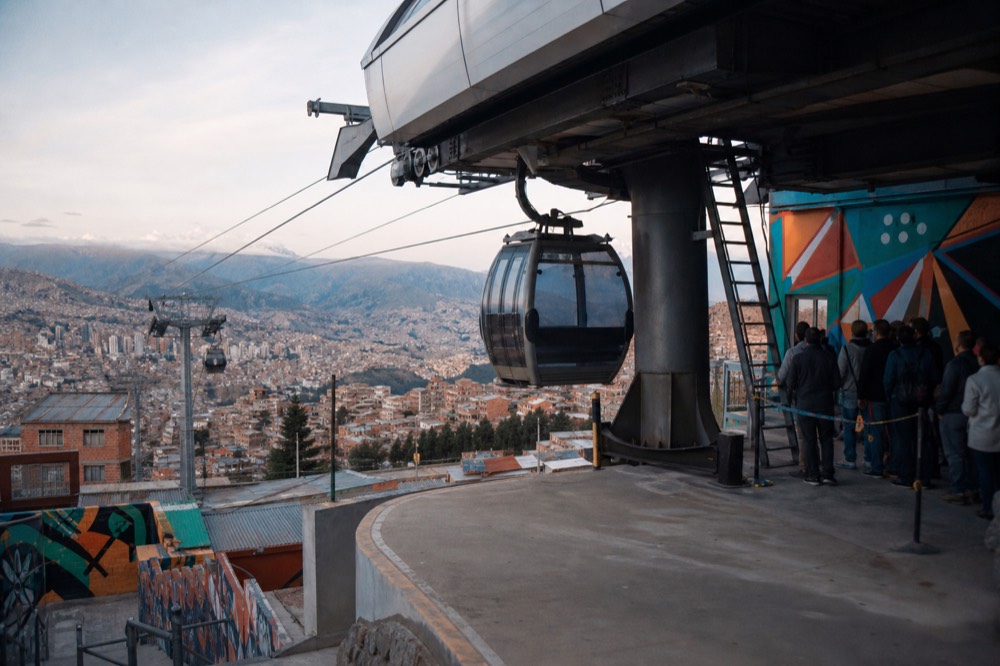
Line J is the other moving part. The metrocable from San Javier up to La Aurora is included in a single integrated metro fare, which makes it one of the best-value rides in Colombia, and it is also the piece most likely to be out for its annual week. When it is down, the tours that build a cable-car leg into the route substitute or reroute rather than cancel. The metro system's own service pages carry current line status.
The cheapest way into the barrio with a guide, and the reviews read like it costs triple. Three hours through the escalators and viewpoints with snacks, a mango-lime popsicle, and rap and breakdance shows where the guides let the neighborhood tell its own story.
The longest of the cable-car routes at four and a half hours, with a fruit tasting worked in between the metro legs and the graffiti alleys. Suits a first day in Medellín when you want the city's geography to make sense before anything else.
For a drink on a terrace with the valley lit up, yes, on the main corridor and preferably with a guide. As a substitute for the daytime walk, no. The murals need light, the artists and dance crews work daytime hours, and the daylight safety pattern that makes this route comfortable does not extend past dusk on the side streets.
Evening on the corridor is a genuinely different product rather than a later version of the same one. The terraces stay open, the bars fill with a mixed local and visitor crowd, and the view of the valley switching on is the best thing about the hour. What you will not get is the graffiti in daylight, the workshops, the street food at full strength, or the guides who make the murals mean something.
The practical structure of the twelve tours reflects this. Departures cluster in the morning and early afternoon because that is when the barrio performs. Booking an evening slot generally means either a specialised experience or a late departure that finishes in fading light, which is the least satisfying version of a three-hour walk.
The honest recommendation is to treat evening as an add-on after a morning walk if the neighbourhood grabbed you, not as your only visit. Whether the trip earns a morning at all is a fair question, and whether the visit earns its slot answers it without the tourism-board gloss.
Which tour fits which time slot?
Short two-to-three-hour walks fit the 9 to 11am sweet spot cleanly and get you out before the crush. Three-to-four-hour walks with cable car and food work well from mid-morning. Full-day city combinations reach the barrio late morning by design, so they trade crowd avoidance for coverage.
Matching format to slot is the part most people skip, and it is where a good morning turns into a great one. If crowd avoidance is your priority, the shortest formats are your friend: they start earliest, cover the essentials, and finish before the density peaks. If depth matters more, a four-hour route with a cable-car leg justifies a later start because you are covering ground the crowds are not.
Food changes the maths again. The street-food walks are timed to when the stalls are actually cooking, which is mid-morning onward, and an eight o'clock start would mean eating nothing. Five stops across three hours is a lunch as much as a tour, so plan the rest of your day around a late and generous one. You can check morning departures for the street-food walk on the live listing, and walks built around the food stops compares the food-heavy formats against each other.
Group size interacts with timing more than price does. A fifteen-person walk at noon feels calmer than a forty-person walk at ten, because moving forty people through an escalator pinch point takes time no matter how good the guide is. If you cannot go early, go small.
Format
Duration
Best slot
Why
Small-group walk, snacks
2-3 h
9 to 10am
Fastest through the pinch points
Street-food walk, 5 stops
3 h
10 to 11am
Stalls are cooking by then
Flagship metro, cable car and food
3-4 h
9 to 11am
Long route, wants the cool hours
Graffiti workshop
About 4 h
Mid-morning
Spray sessions need daylight
Cable-car heavy route
4.5 h
Early, before queues build
Longest ride, worst afternoon lines
Private with hotel pickup
3-5 h
Your call, so pick 9am
Pickup removes the transit timing problem
Full-day city combination
7-8 h
Fixed, reaches the barrio late morning
Coverage over crowd avoidance
When is the best time for food, music and street life?
Mid-morning to early afternoon on a Friday, Saturday or Sunday. That is when the stalls are all cooking, the dance and rap crews perform to a real audience, and the artists are working walls rather than packing up. The trade-off is direct: the liveliest hours are also the most crowded ones.
Street life here is a working economy, not a scheduled programme, and it responds to footfall. Performers set up when there are people to perform to, which means the quietest hours are also the flattest. If the culture is what you came for rather than the photographs, aim for late morning on a weekend and accept the crowd as the price.
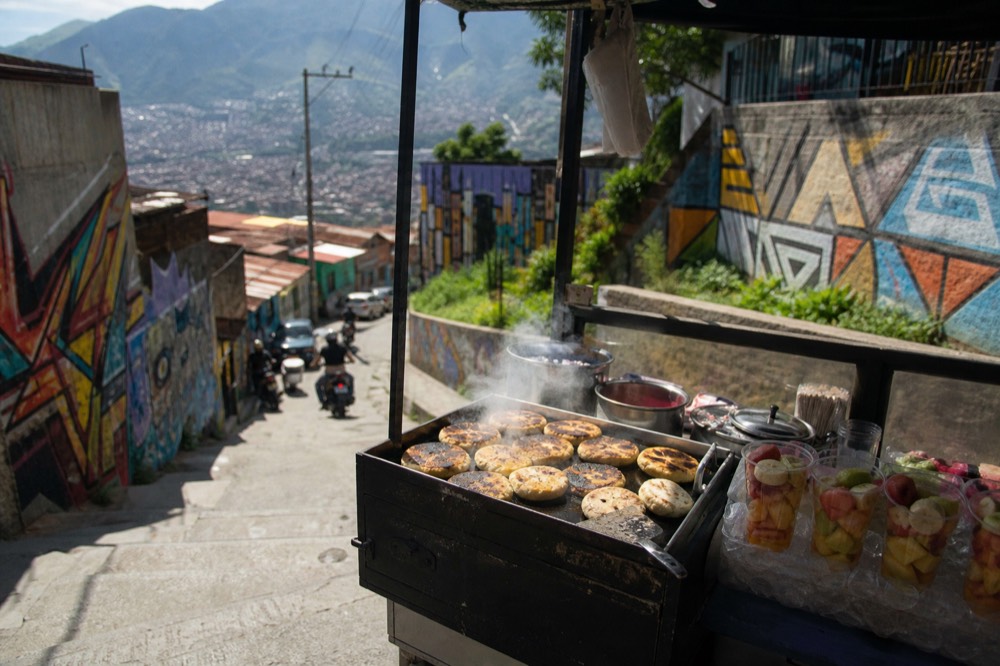
Food follows the same curve with a slight lag. Griddles come on through mid-morning, fruit carts appear with the sun, and the sweet stalls and ice cream do their business in the afternoon heat. A ten or eleven o'clock start on a food-focused walk catches the stalls fresh and the queues short, which is close to the best of both worlds.
The tip-based walks concentrate heavily in this window too, which affects density on the corridor more than most visitors realise. Several run daily and they move in large groups. If you are on a paid small-group walk at the same hour you will be sharing every stop with them, and free walking options and what they cost in practice explains why "free" is the wrong word for it.
The 9 to 11am weekday window clears the crowd curve, the heat and the afternoon rain at once.
Common questions about timing a Comuna 13 visit
How early is too early to arrive?
Before about 8am you are visiting a residential street rather than the corridor everyone describes. The escalators are running, the views are there and the murals are lit beautifully, but almost nothing tourist-facing is open: no stalls cooking, no performances, few artists working. Photographers love that hour. Most visitors find it thin. Nine o'clock is the earliest arrival that still delivers the whole experience.
Is Sunday really that much busier?
Yes, and by a clear margin. Sunday adds Medellín's own weekend traffic to the visitor flow, so the landings, terraces and performance spots all run at their densest. The atmosphere is excellent if crowds do not bother you and the food scene is at full strength. If you are travelling with small children, anyone unsteady on stairs, or you simply want photographs without strangers in them, pick a Tuesday to Thursday instead.
What happens if it rains on my booked date?
Tours run. Parts of the route are covered, the terraces have roofs, and guides adapt the stops. What you lose is the valley view from the viewpoints and the outdoor performances, plus footing on the painted steps gets poor. Since every listed tour cancels free up to 24 hours ahead, checking the forecast the day before and shifting to the next morning costs nothing and usually improves the visit.
Do I need to book in advance or can I turn up?
The corridor itself needs no booking, no ticket and no fee at any hour: it is a public street with free escalators. Guided walks are a different matter in high season. January, July and August fill early, and the small-group formats with fifteen or fewer places go first because they are the ones people want. Booking two or three days ahead is usually enough outside those peaks.
Is there a season when the barrio itself is more interesting?
August, when the Feria de las Flores fills Medellín, brings the most energy to the whole city and the corridor feels it. December carries festive lighting and a strong local turnout. Both are also the busiest and priciest windows of the year. If atmosphere matters more than elbow room, aim at those. If you want the murals and the story without the crush, February, September and November are the underrated months.
Timing this visit well is not complicated: a weekday, a nine or ten o'clock start, and a month outside the two wet runs if your dates are flexible. Everything else is refinement. The corridor rewards people who show up before the buses do, and it stays rewarding well after they arrive, which is why why it tops the city's visitor list is a fair question with a straightforward answer. When you are ready to pick a departure, compare all twelve Comuna 13 tours side by side on start time, length and group size.
Take the morning slot with the food stops built in
Three hours, five food stops, rated 4.9 across 9,044 reviews, from $21 with free cancellation up to 24 hours.