Visiting Comuna 13 Without a Tour: The Self-Guided Route
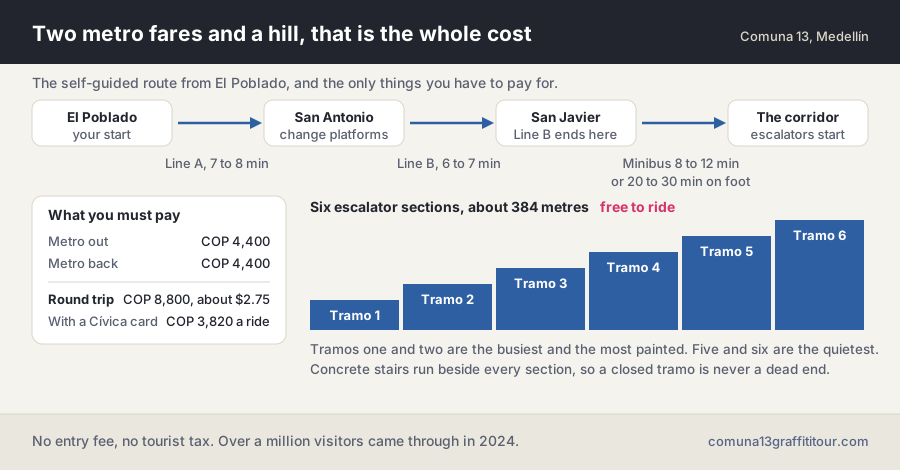
The corridor has no gate, no ticket and no queue. Getting there costs about 4,400 pesos, and the only thing you have to buy is your own sense of direction.
Yes, and it costs almost nothing. Take Line B west to San Javier, the terminus, then walk twenty to thirty minutes uphill or take a local minibus to the escalator corridor in Las Independencias. The six escalator sections are public and free. Total outlay is a return metro fare, roughly 8,800 COP.
There is no ticket office. There is no turnstile at the bottom of the escalators, no entry fee for the neighbourhood, and no tourist tax anywhere in it. Everything that draws a million-plus visitors a year up this hillside is public infrastructure paid for by the city, which means the only unavoidable cost of a self-guided visit is the metro fare that gets you to the bottom of the hill.
That is the good news, and it is genuinely good. The complication is that the corridor is a working residential barrio built on a 45-degree slope, the murals do not explain themselves, and the difference between a great self-guided morning and a confusing one comes down to a handful of decisions you make before leaving your hotel. Here is the route, the cost, the timing and the honest list of what you give up.
Can you visit Comuna 13 on your own?
Yes. The neighbourhood is open, public and free to walk. Take Line B to San Javier, the western terminus of the metro, then go uphill by minibus or on foot to the escalator corridor in Las Independencias. The six escalator sections cost nothing to ride. A return metro fare of about 8,800 COP is the entire mandatory spend.
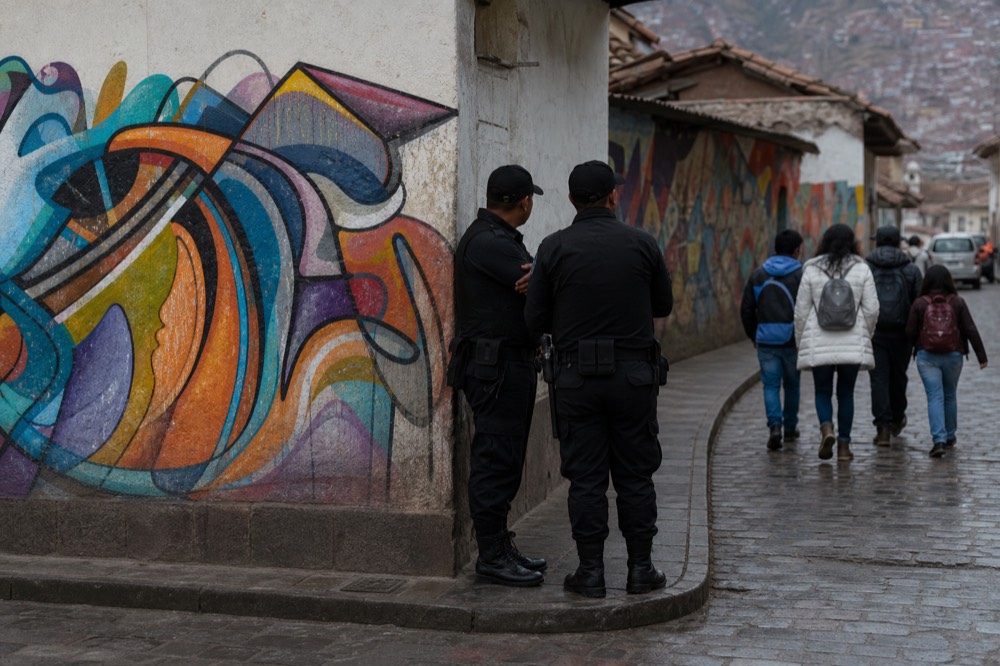
Thousands of people do this every week, including plenty who never book anything. The tourist corridor is heavily walked and policed during daylight, signposted well enough at the escalator end, and full of other visitors doing exactly what you are doing. You will not be the only foreigner on the stairs at eleven in the morning.
What self-guided does not mean is unstructured. The corridor runs along one spine, the escalator sendero, and almost everything visitors come for sits within a few hundred metres either side of it. Wander far off that spine and you are in ordinary residential streets where there is nothing to see and where you are, quite reasonably, an oddity. Stay on the corridor and the route more or less makes itself.
The other thing to be clear about: there is no organised gate-keeping stopping you. Nobody will demand you hire a guide, and the occasional online claim that independent visitors are turned away does not match what current visitors report. Guides will offer their services at the base of the escalators. Declining politely is normal and nobody makes it awkward.
How do you get to Comuna 13 by metro?
Line B, westbound, all the way to San Javier. From El Poblado that means Line A north to San Antonio, change to Line B, then ride west to the terminus, about fourteen minutes of travel on one integrated fare of roughly 4,400 COP. A Cívica card drops the same ride to about 3,820.
San Javier is the end of the line, so you cannot overshoot it. Trains run Monday to Saturday from around 4:30 in the morning until 11 at night, and Sundays and holidays from about 5 until 10, with the exact per-line variations published by the Medellín metro.
Leg
How
Cost
Notes
El Poblado to San Antonio
Line A, northbound
Included in one fare
The transfer station for Line B
San Antonio to San Javier
Line B, westbound
Same fare, no top-up
San Javier is the terminus, about 14 min total from El Poblado
San Javier to the corridor, walking
On foot, uphill
Free
20 to 30 minutes, steep in the last third
San Javier to the corridor, minibus
Local bus from beside the station
Small cash fare
Ask for the escalators, drivers know it
San Javier to La Aurora
Line J metrocable
Covered by the same integrated fare
No extra charge, unlike the Arví line
Return
Reverse, or cable back down
Second fare, about 4,400 COP
Cívica card holders pay about 3,820
The single most useful fact on that table is the integrated fare. One payment covers metro plus the Line J cable car above San Javier, which means riding up the mountain and back costs nothing extra. Line L to Arví is the exception that requires a separate ticket, and it is nowhere near here.
Buy a bearer ticket at the window if you are only in the city a few days. If you are staying longer, the Cívica card pays for itself quickly and removes the queue. Either way, the machines and windows at El Poblado are straightforward, and Line B trains are frequent enough that timetables are irrelevant.
Two notes on the cable car. Line J runs later in the morning than the metro does, roughly nine to ten at night, so an early start means metro only. And the six metrocable lines rotate through annual major maintenance between July and October, with Line J closed for its window from 16 to 22 July 2026, which is exactly the sort of thing worth a glance at before building a morning around it. The wider picture of the metro and cable-car routes in detail covers the alternatives if the cable is down.
What is the route from San Javier station to the escalators?
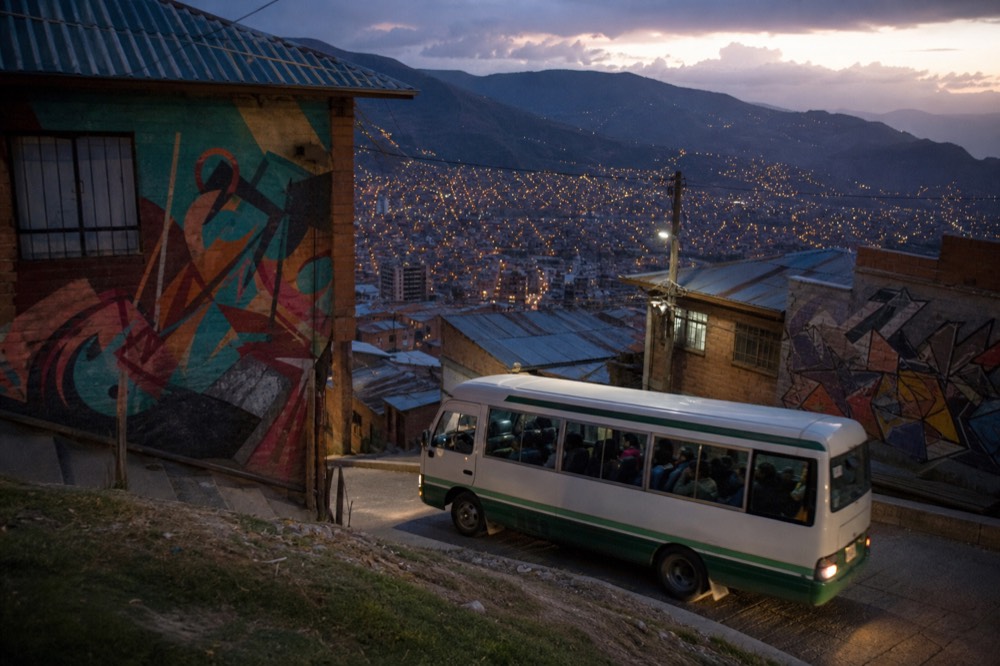
Come out of San Javier station and go uphill. On foot it is a twenty to thirty minute climb through ordinary residential streets, steepening near the end. Local minibuses, including the 221i and 225i services, run the same direction from beside the station for a small cash fare. The escalator corridor sits in the Las Independencias barrio.
The walk is the version most people underestimate. It is not dangerous and it is not confusing, but it is a real climb at altitude, and doing it at one in the afternoon in the sun leaves you at the bottom of the escalators already tired. Medellín sits at a comfortable 19 to 22 degrees year-round, which sounds easy until you are forty minutes into a hill.
The minibus is the local answer and costs a fraction of a coffee. They leave from the street beside the station, they fill up and go rather than following a timetable, and saying "las escaleras" is enough. You will be dropped within a couple of minutes' walk of the corridor entrance. This is also the option that makes the whole trip viable for anyone travelling with children or a parent who does not want the climb.
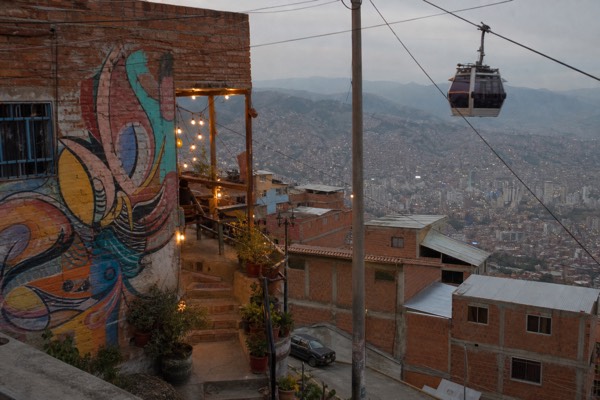
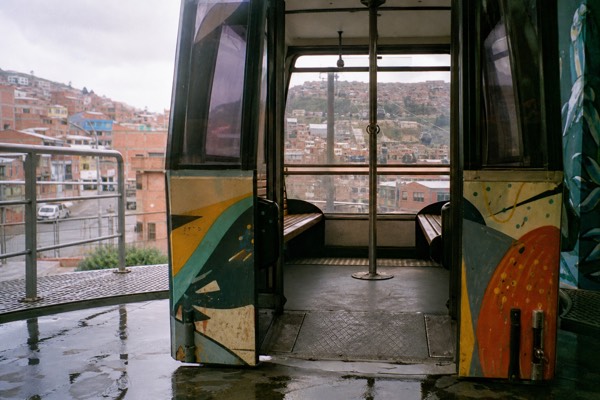
The third route is the cable car, and it is the one that changes the shape of the day. Line J lifts from San Javier over the hillside to La Aurora on the same fare you already paid. It does not deposit you at the escalators, so it is not a substitute for the climb, but riding up and back before or after the corridor gives you the aerial view of the whole comuna that no amount of walking provides. Most people who do this call it the best free thing in the neighbourhood.
What does the escalator corridor look like, section by section?
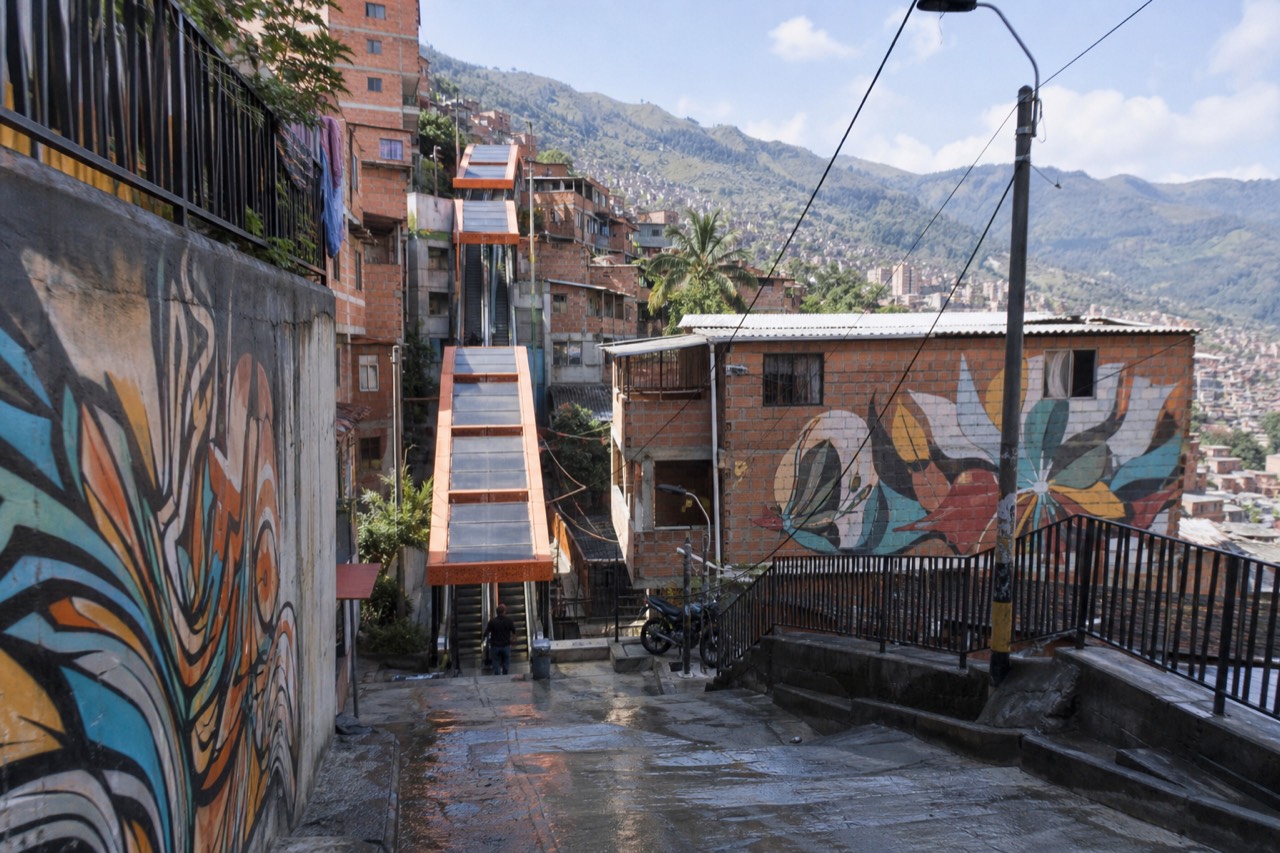
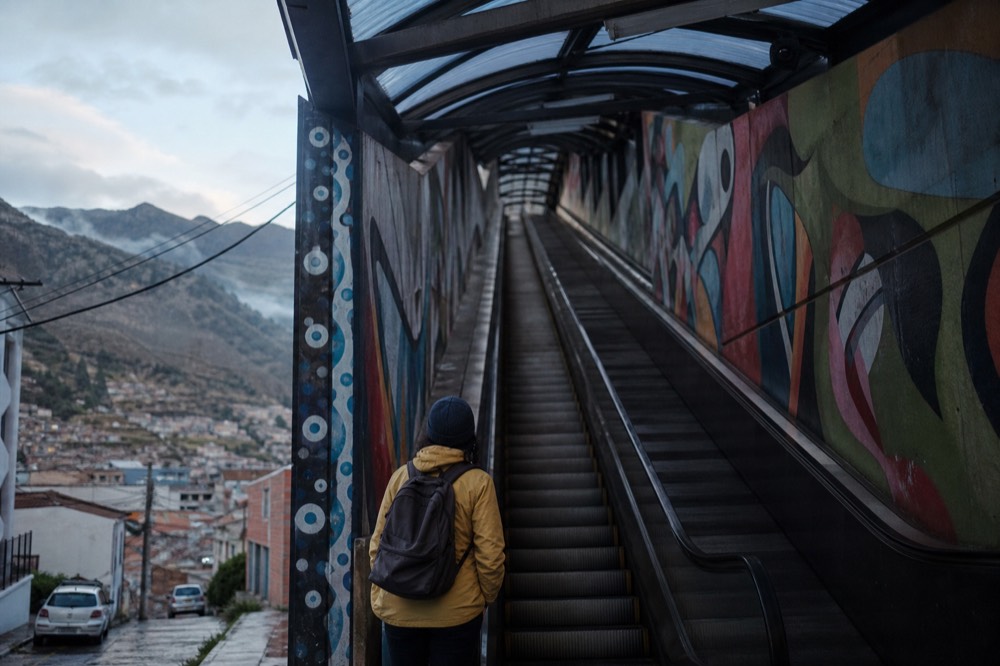
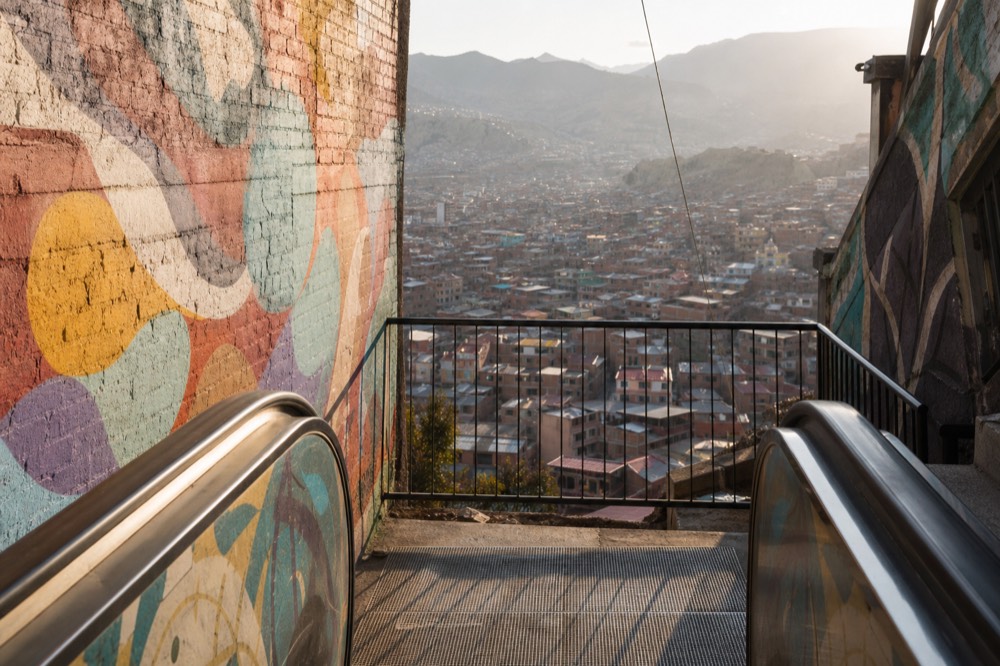
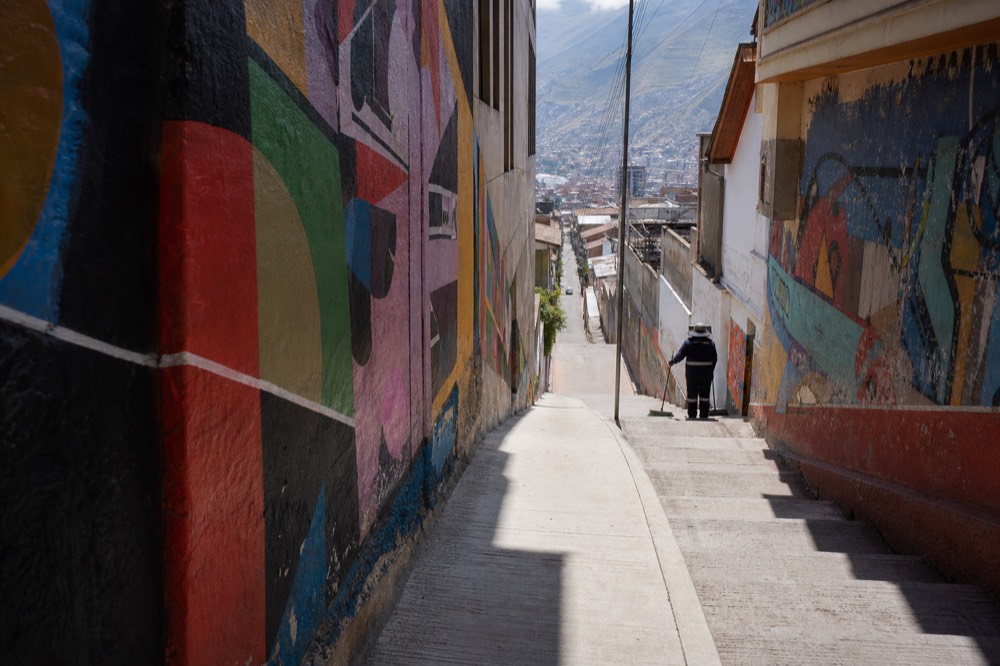
Six escalator sections, called tramos, climbing about 384 metres of hillside that used to be roughly 350 concrete steps. They opened in 2012, run about sixteen hours a day, and are free. Between and beside them sit landings, viewpoints, stalls, painted walls and the stairs that residents still use.
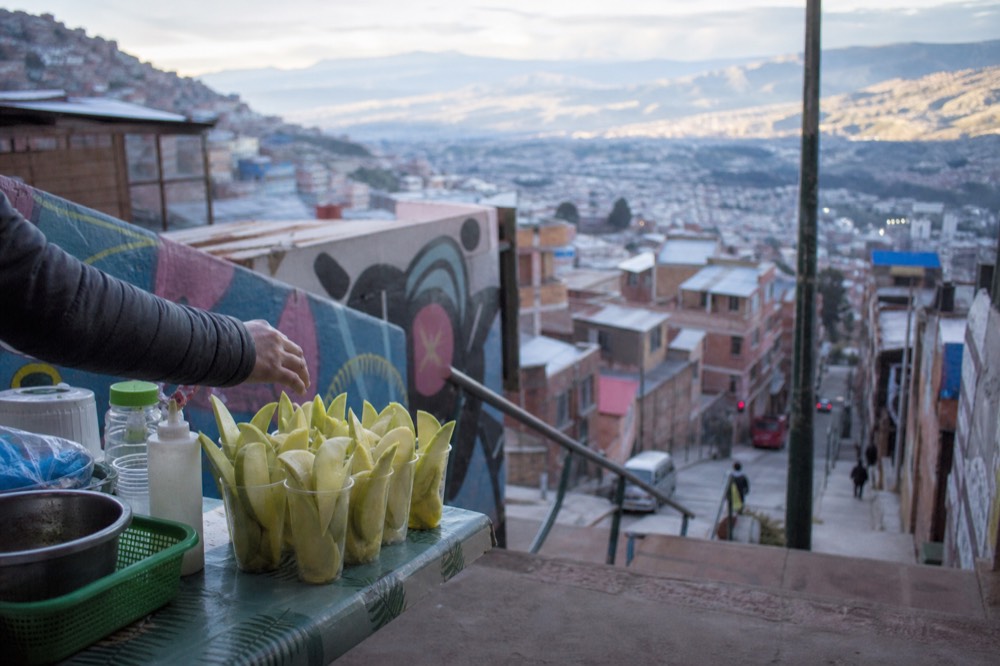
Think of the corridor as one continuous route with pauses built in. You ride a section, step off onto a landing, and the landing is where everything happens: the murals, the views back down over the valley, someone selling mango biche, occasionally a dance or rap performance working the crowd. Then the next section.
Step
What is there
Cost
What to watch for
Corridor entrance
Small plaza, guides offering walks, first painted walls
Free
Polite declines are normal here
Tramos one and two
The lower flights, densest murals, most crowded
Free
Bottleneck point on busy days
Mid landings
Viewpoints back over the valley, food and drink stalls
Cash for anything you buy
Best photographs of the whole route
Tramos three and four
Steeper middle sections, residential doorways either side
Free
Real homes; do not photograph interiors
Upper landings
Performance space, souvenir stalls, terrace bars
Cash
Where street shows usually happen
Tramos five and six
Final flights to the top of the sendero
Free
Quietest part of the corridor
Top of the corridor
Terraces, wider views, the way back down
Free
Descending on foot is easy and fast
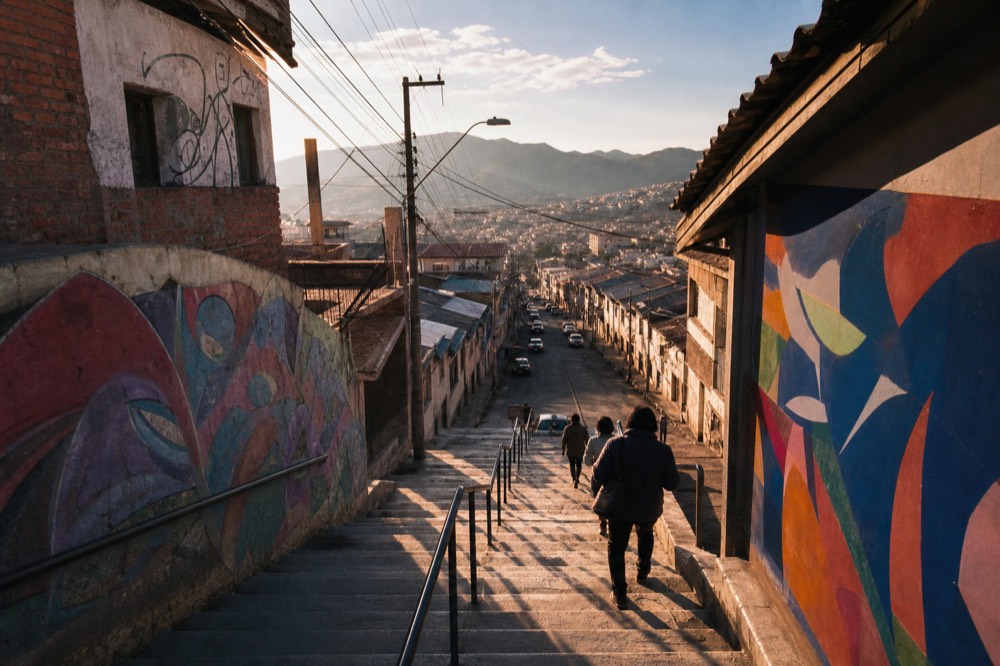
Stairs beside every section
Concrete steps, always open
Free
Your fallback when a tramo is under works
That last row matters more in 2026 than it used to. The city began integral maintenance on the escalators in late 2025 and the work has continued into 2026, handled one tramo at a time so the corridor never closes, with the adjacent stairs staying open throughout. Announcements go up on the Medellín city site. Nothing about this ruins a visit. It occasionally means climbing a flight you expected to ride, which is exactly what residents did for decades before 2012, and the story of how the six escalator sections work is half the reason the neighbourhood is famous at all.
When should you go, and what is actually open?
Go on a weekday morning. Sundays are the busiest day of the week and the corridor is at its worst from late morning onward. Metro trains start around 4:30, the Line J cable car does not run until about nine, and the escalators operate roughly sixteen hours a day. Rain here is an afternoon problem, not a morning one.
The crowd curve is the thing self-guided visitors control best, because you are not tied to a departure time. Over a million people came through the corridor in 2024 and capacity strain is well documented, so the difference between a Tuesday at half past eight and a Sunday at noon is not a small one. It is the difference between hearing birds and queueing to stand on a landing.
What
Hours
Busiest
Best window
Metro Lines A and B
About 4:30 to 23:00, Monday to Saturday
Commuter peaks
Mid-morning, after 9
Metro, Sundays and holidays
About 5:00 to 22:00
All day Sunday
Very early, or skip Sunday
Line J metrocable
About 9:00 to 22:00, daily
Weekend afternoons
First hour after opening
Escalator corridor
Roughly 16 hours daily
Late morning to late afternoon
Before 10, or after 4
Street performances
Corridor hours
Weekend afternoons
Weekend, if that is what you want
Food and drink stalls
Corridor hours, informal
Midday and weekends
Anytime the corridor is busy
Weather is the other lever. Medellín's rain is bimodal, with wetter stretches around April to May and October to November, May the heaviest at roughly 268 mm and January the driest at around 112 mm. What that means in practice is not "avoid May". It means start early in May, because the rain arrives in the afternoon and a morning in the wet season is often perfectly clear.
If you want the performances rather than the quiet, invert all of the above and come on a weekend afternoon. The corridor at its most crowded is also the corridor at its most alive, with dancers working the upper landings and every stall open. That is a legitimate choice, just not the one people mean when they say they want to beat the crowds.
What does a self-guided visit cost against a guided one?
About 8,800 COP, or roughly $2.75, for one person doing it alone on public transport. The cheapest guided walk is $14 plus the same fares. The $21 flagship format folds the metro and cable legs into the ticket. For a family of four the gap between doing it yourself and the cheapest guided option is roughly $56.
Run it as a full total rather than a headline, because the guided figures include things you would otherwise buy separately.
Party
Self-guided total
Cheapest guided
Flagship guided
What the gap buys
One person
~8,800 COP, about $2.75
$14 plus fares, about $17
$21, transport inside
Guide, snacks, group cap
A couple
~17,600 COP, about $5.50
$28 plus fares, about $33
$42, transport inside
The above, twice
Family of four
~35,200 COP, about $11
$56 plus fares, about $67
$84, transport inside
Pace control matters most here
Cívica card holders
~7,640 COP, about $2.40
Unchanged
Unchanged
Card saves about 580 COP a ride
Add food and drink
Cash, your call
Included on most walks
Arepa and drink included
The stalls are cheap either way
So the honest number is that going alone saves a single traveller about fourteen dollars against the cheapest ticket and about eighteen against the flagship. That is real money on a long trip and close to nothing on a two-week holiday, which is why this decision usually turns on what you want rather than what you can afford. The per-ticket breakdown for all twelve formats sits in the full guided price ladder.
There is a middle path plenty of travellers take: go self-guided first thing on a quiet weekday for the walls and the views, then book a walk later in the trip for the history. Or the reverse, which works better, because the second visit is far richer once you know what you are looking at.
Two metro fares and a hill. That is the entire mandatory cost of doing it yourself.
What do you lose without a guide?
The story, almost entirely. The murals carry no captions, the escalators explain nothing about why they were built, and the events of October 2002 leave no marker on the corridor. You also lose access to the residents who talk to guides they know, the food stops chosen for you, and any group small enough to ask questions in.
This is the real trade and it deserves more than a shrug. Walking the corridor alone gives you an excellent set of photographs and a genuine feel for the slope, the density and the noise. What it does not give you is any sense of what happened here, and the entire reason this hillside is on your itinerary is what happened here.
What you come for
Alone you get
A guide adds
The murals
Colour, scale, a lot of good photographs
Who painted them, what they replaced, which get repainted and why
The escalators
A free ride and a view
Why a city spent millions on a stairway, and what it changed
The 2002 operation
Nothing. There are no markers
The sequence, the aftermath, what residents still contend with
The hip-hop and graffiti scene
Whatever is happening as you pass
The collectives behind it and where they still work
Residents
Polite distance, correctly
Introductions, conversations, doorway welcomes
Food
Whatever stall you pick
Chosen stops, often five on food-focused walks
Safety and pacing
Your own judgement
Someone who reads the crowd for you
The largest military operation in Colombia's recent urban history took place on these streets in October 2002. Exhumations connected to it are still ongoing at a site within the comuna. None of that is written on a wall, and a self-guided visitor can walk the entire corridor without encountering it once, which is how you end up with the photo-backdrop version of the neighbourhood that residents quietly resent. The background is set out plainly on the Operation Orion record, and why this hillside became famous puts it in the tourism context.
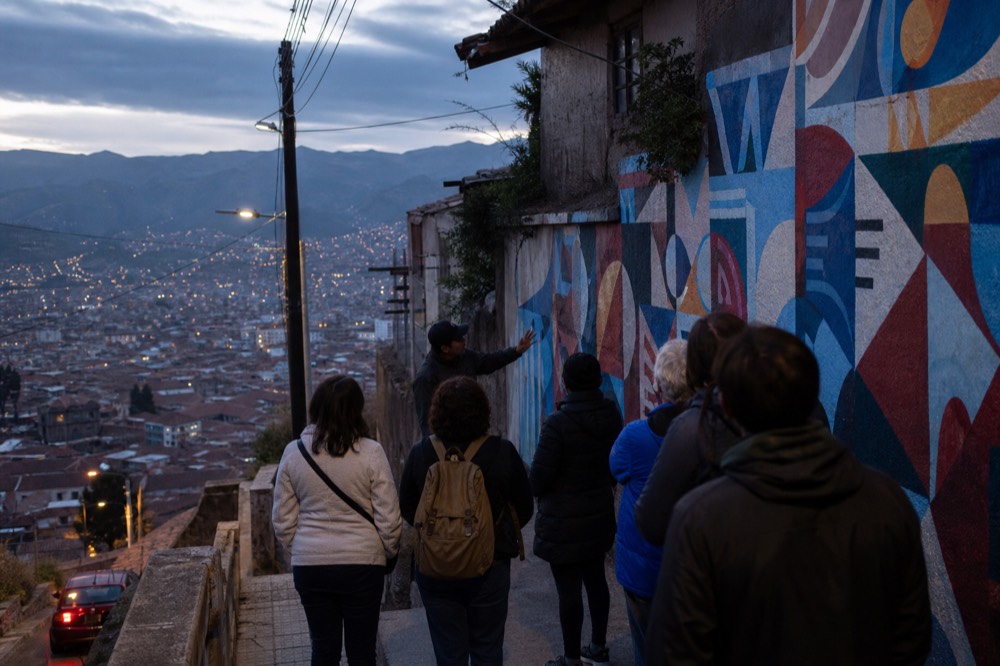
If the story is the part you want, the smallest formats deliver it best. A tiny group led by someone born on this hillside is a completely different experience from a group of forty, and you can see what the barrio-guided street-art walk includes alongside the food-stop walks with tastings included if eating your way through matters as much as listening.
The one most people book, and the reason is the route: metro from Poblado, the Line J cable car over the rooftops, then the murals on foot with an arepa in one hand and a drink at a viewpoint bar at the end. Transit tickets are already in the price, so the day runs itself.
The budget private option: your own vehicle and driver-guide, hotel pickup, and every metro, cable and toll fee handled. Wheelchair and stroller accessible, which almost nothing else in the barrio's steep alleys can claim.
In daylight, on the tourist corridor, yes, with ordinary city precautions. The corridor is heavily walked and policed during the day and there is no pattern of violent incidents against visitors in the current record. Pickpocketing in dense crowds is the genuine risk. The picture changes off the corridor and after dark.
Set the national context first, because it gets misquoted constantly. The United States keeps Colombia at Level 3, "reconsider travel", in its March 2026 advisory, and Medellín is not inside any of the Level 4 do-not-travel zones, which are Arauca, Cauca outside Popayán, Valle del Cauca outside Cali, Norte de Santander, and the strip within 10 km of the Venezuelan border. Canada's advice separately flags drink-spiking with scopolamine in Colombian cities including this one, a nightlife risk rather than a corridor risk.
Situation
The real risk
What to do
Packed corridor, weekend afternoon
Pocket theft, phone snatching
Front pockets, phone on a strap, no open bag
Photographing residents or doorways
Causing offence, occasional confrontation
Ask, or photograph walls and distant figures
Wandering off the corridor spine
Getting lost in steep residential streets
Stay on the sendero, ask if unsure
After sunset
Fewer people, less visibility, less policing
Be down and on the metro before dark
Flashing cameras and jewellery
Marking yourself as a target
Phone away between shots, nothing valuable visible
Drinks in bars afterwards
Scopolamine spiking, city-wide issue
Never leave a drink, decline from strangers
Solo travellers
Same as the above, slightly amplified
Go in the morning, tell someone your plan
None of that is exotic advice. It is the same list you would apply in Barcelona or Naples, applied to a hillside with more stairs. The nuance that matters for self-guided visitors specifically is the corridor boundary: guided groups stay on it automatically, and independent walkers occasionally do not. The detail sits in the honest safety read, and what changes after dark covers the evening question separately, since the answer there is genuinely different.
Can you buy food and drinks as a walk-up?
Yes, easily, and it is one of the better parts of doing it alone. The corridor landings carry stalls selling mango biche with salt and lime, arepas, fruit, ice lollies, coffee and beer, plus terrace bars at the upper levels. Bring small peso notes; almost nothing takes a card.
Nobody needs a booking to eat here. The stalls are informal, they open when the corridor is busy, and the prices are barrio prices rather than tourist-corridor prices in most cases. Ordering takes no Spanish beyond pointing and saying gracias.
What you will find
How it is sold
Payment
Practical note
Mango biche
Green mango, salt, lime, sometimes chilli
Small notes
The signature corridor snack
Arepas
Off a griddle, filled or plain
Small notes
Fast, filling, everywhere
Fresh fruit and juices
Cut to order from a cart
Small notes
Good in the heat of the climb
Paletas and ice lollies
From a cooler box
Coins and small notes
The stalls move around
Coffee
Small cups from a flask or a stand
Small notes
Served sweet unless you ask
Beer and cocktails
Terrace bars at the upper landings
Small notes, occasionally card
This is where the views are
Souvenirs and prints
Stalls and small shops on the landings
Cash preferred
Bargaining is not really the custom
Two practical points. Break your notes before you arrive, because a stallholder should not have to find change for a 50,000 note at nine in the morning. And treat the terrace bars as the actual destination rather than a pit stop: sitting with a drink and looking out over the valley for half an hour is what most people remember, and it costs very little.
Guided food-focused walks do this differently rather than better. They pick five stops, sequence them, and explain what you are eating, which is worth paying for if you want the food to be the point of the morning rather than fuel for the hill.
When is self-guided the wrong call?
When you have no Spanish and want the history, when you are visiting on a Sunday, when anyone in the party cannot manage a hill or a crowd, or when this is your only day in Medellín. Doing it alone is cheap and easy. It is also the version most likely to leave you with photographs and no understanding.
The Sunday case is the sharpest. The corridor on a Sunday afternoon is a crush, and an independent visitor with no fixed plan tends to arrive at exactly the wrong hour, spend forty minutes in a queue of shoulders, and leave early. A guided group on the same day at least has someone reading the flow and choosing when to move.
The language case runs close behind. Most stallholders, residents and performers here work in Spanish, and while you can absolutely walk the corridor with none, you cannot ask anything. Everything you would want to know about a wall, a house, a name, or a date stays out of reach.
The mobility case is the most practical. This is a very steep hillside with stairs beside every escalator section and no lift alternative, and while the escalators do most of the vertical work, the approach and the landings do not. The one format that commits to wheelchair and stroller access is a private walk with pickup, and it exists precisely because the standard route does not suit everyone.
Then there is the single-day case. If you have one day in Medellín and this is the thing you came for, spending fourteen dollars to have it explained is not an extravagance. Plenty of people who did it alone say the same thing afterwards: the walls were beautiful and they had no idea what they were looking at.
For anyone weighing the two properly, how tip-based walks are run sits between them, giving you a guide for a tip rather than a ticket. If you want the aerial version instead, the cable-car routes compared covers the formats built around Line J. And the twelve-tour comparison table puts every bookable option on one page against price, rating and group size, which is the fastest way to decide whether doing it yourself is a saving or a shortcut.
Common questions
Do you need a guide to visit Comuna 13?
No. The neighbourhood is public, there is no entry fee, and the escalator corridor is free to walk and ride. Independent visitors are common and are not turned away. What a guide adds is the history, the introductions and the food stops, none of which the corridor provides on its own.
How much does it cost to visit Comuna 13 by yourself?
About 8,800 COP for one person, roughly $2.75, covering a return metro fare of about 4,400 each way. The escalators, the corridor and the views cost nothing. A Cívica card brings each ride down to about 3,820. Anything you eat or drink is extra and inexpensive.
Which metro station is Comuna 13?
San Javier, the western terminus of Line B. From there it is a 20 to 30 minute uphill walk to the escalator corridor, a short local minibus ride, or a Line J cable car ride over the hillside to La Aurora on the same integrated fare.
Are the Comuna 13 escalators free?
Yes. All six sections are public infrastructure, free to ride, operating roughly sixteen hours a day since 2012. Maintenance has been running through the sections one at a time since late 2025, and the concrete stairs beside each escalator stay open while work is under way.
Is it safe to walk around Comuna 13 alone?
On the tourist corridor in daylight, yes, with normal city precautions. The corridor is busy and policed, and the current record shows no pattern of violent incidents against visitors on organised daytime routes. Pickpocketing in crowds is the real risk. Be back down and on the metro before dark.
Add the story to the walk you can already do free
Two to three hours with a guide born on this hillside, snacks included, group kept tiny. See the current price and open dates.